架构与 pipeline 保持原形;视频模型仍执行真实 fine-tuning。
A100 40GB 上生成一张 \(1024\times1024\) 噪声图的预处理时间,不代表视频生成耗时。
每帧空间 i.i.d. \(\mathcal N(0,1)\);跨时间相关性承载控制。
问题、输入与输出
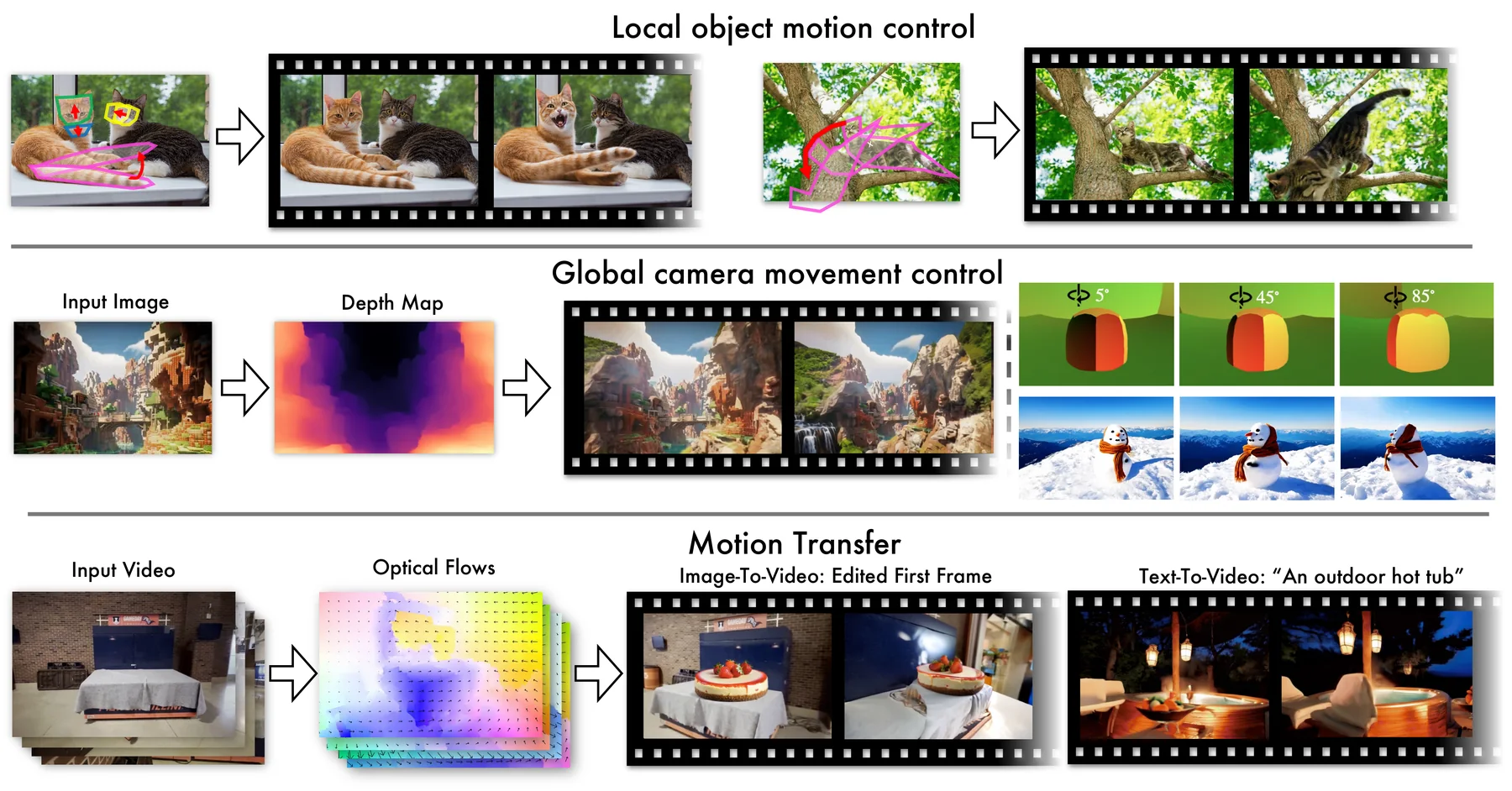
现有视频控制经常要求额外网络、注意力修改、相机参数或稀疏轨迹。本文测试一个直接假设:把运动写进初始噪声的时间协方差,可让基础模型沿 flow 生成,同时保留每帧熟悉的标准高斯输入。
输入
- 训练:视频、原字幕、相邻帧 forward/backward flow。
- 局部控制:首帧、文本、polygon 的平移、旋转与缩放轨迹。
- 迁移与相机控制:driving video、depth warp 或 3D renderer flow。
输出
- 噪声算法输出下一帧噪声 \(q'\) 与 density \(p'\)。
- 视频模型输出 T2V 或 I2V 视频。
- degradation \(\gamma\) 连续调节 motion adherence。
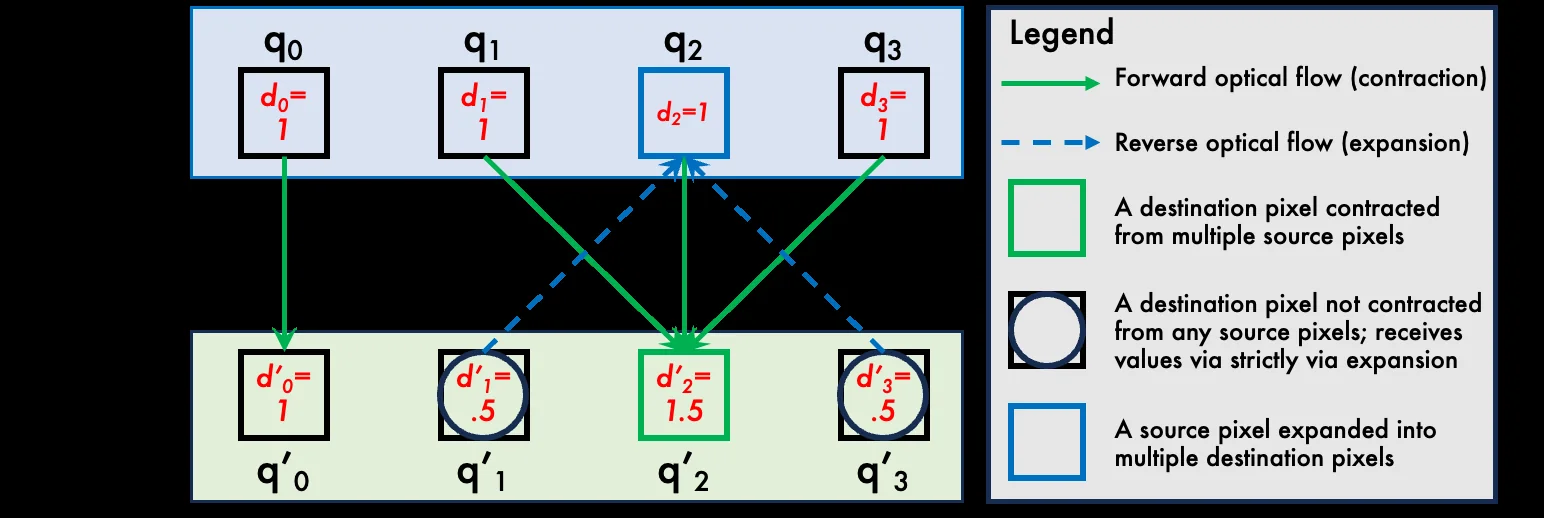
Algorithm 1:逐帧扭曲

理论保证的范围
在 flow 与 density 不依赖当前 noise value 的条件下,每个固定帧与通道的空间像素 i.i.d. 标准高斯。跨帧联合分布有意相关:
训练、推理与 degradation
CogVideoX-5B:需要 fine-tuning
- T2V 与 I2V;4M 视频,至少 \(720\times480\),约 10–120 秒。
- CogVLM2 captions。
- rank-2048 LoRA,learning rate \(10^{-5}\),batch 8,30k iterations。
- 8×A100 80GB,总计 40 GPU-days。
- 沿用 denoising MSE;optimizer、scheduler、warmup、precision 与 seeds 未披露。
逐帧 SR / relighting:training-free
- RAFT 提取 input video flow。
- Algorithm 1 产生逐帧 Gaussian、跨帧相关的 noise。
- DeepFloyd IF 做 SR;DifFRelight 做 portrait relighting。
- 预训练 image-to-image weights 保持冻结。
AnimateDiff:同样执行 fine-tuning
附录在 WebVid 上训练 AnimateDiff,使用 8×A100 40GB、约 2 天,输入 12 帧、\(256\times320\)。论文只给 Figure 16 定性结果,没有对应量化表、优化器或学习率,因此这项实验支持跨 backbone 的可行性,无法支持训练成本或性能幅度的精确比较。
分母恢复单位方差。\(\gamma=0\) 保留完整 warp,\(\gamma=1\) 退化为独立 Gaussian。Local motion 常用 \(\gamma\in[0.5,0.7]\),motion transfer 常用 \(\gamma\in[0.2,0.5]\)。
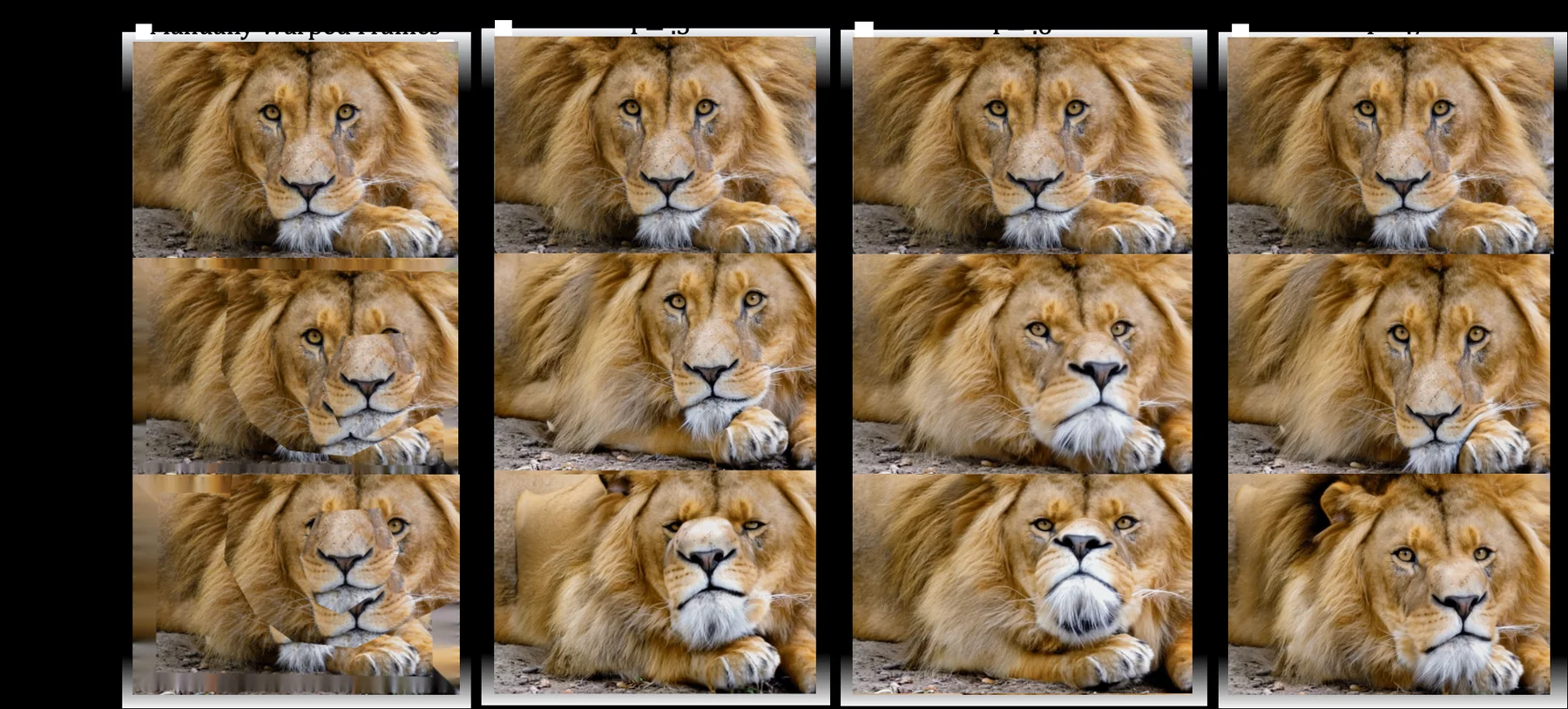
Image space noise 到 latent space:空间 \(8\times8\) mean pooling 后乘 8,时间每 4 帧 nearest。若 64 个输入像素独立且单位方差:
推理以 warped latent 初始化 deterministic sampler,论文举 DDIM 为例。公开脚本默认 30 steps、guidance 6;scheduler 由安装的 Diffusers 与模型配置决定。
完整实验数字
Table 1 · Gaussianity、效率、SR 与 relighting
| 指标 | Fixed | Random | Bilinear | Bicubic | Nearest | PYoCo | CaV | HIWYN | InfRes | Ours |
|---|---|---|---|---|---|---|---|---|---|---|
| Gaussianity | ||||||||||
| Moran’s I index ↓ | -0.00027 | 0.00019 | 0.30 | 0.24 | 0.26 | 0.00023 | -0.00079 | 0.0011 | 0.00036 | 0.00014 |
| Moran’s I p-value ↑ | 0.29 | 0.36 | 0.0 | 0.0 | 0.0 | 0.73 | 0.25 | 0.11 | 0.60 | 0.84 |
| K-S index ↓ | 0.089 | 0.075 | 0.34 | 0.37 | 0.17 | 0.13 | 0.073 | 0.062 | 0.055 | 0.060 |
| K-S p-value ↑ | 0.12 | 0.19 | 0.0005 | 0.0004 | 0.04 | 0.08 | 0.27 | 0.42 | 0.50 | 0.44 |
| Efficiency at 1024×1024 · A100 40GB | ||||||||||
| GPU time (ms) ↓ | <1 | <1 | 4.41 | 4.33 | 6.82 | 3.54 | 2.31 | 55.2 | 2.61 | 2.14 |
| Super-resolution · DeepFloyd IF · DAVIS 43 · 64² → 256² | ||||||||||
| LPIPS ↓ | 0.29 | 0.29 | 0.60 | 0.62 | 0.55 | 0.28 | 0.28 | 0.29 | 0.28 | 0.29 |
| SSIM ↑ | 0.88 | 0.88 | 0.72 | 0.70 | 0.65 | 0.88 | 0.88 | 0.87 | 0.88 | 0.88 |
| PSNR ↑ | 29.36 | 29.41 | 28.68 | 28.55 | 28.59 | 29.40 | 29.39 | 29.31 | 29.38 | 29.39 |
| Warping error ↓ | 163.84 | 233.65 | 165.90 | 167.95 | 244.72 | 186.63 | 220.28 | 164.35 | 190.82 | 152.04 |
| Relighting · DifFRelight · 4 subjects × 4 trajectories | ||||||||||
| LPIPS ↓ | 0.33 | 0.31 | 0.40 | 0.41 | 0.73 | 0.35 | 0.35 | 0.36 | 0.35 | 0.33 |
| SSIM ↑ | 0.69 | 0.77 | 0.73 | 0.70 | 0.38 | 0.58 | 0.67 | 0.64 | 0.60 | 0.70 |
| PSNR ↑ | 28.91 | 29.02 | 28.87 | 28.82 | 28.21 | 28.83 | 28.87 | 28.82 | 28.81 | 28.92 |
| Warping error ↓ | 86.65 | 128.11 | 47.53 | 43.57 | 164.42 | 95.24 | 106.77 | 87.72 | 87.97 | 85.82 |
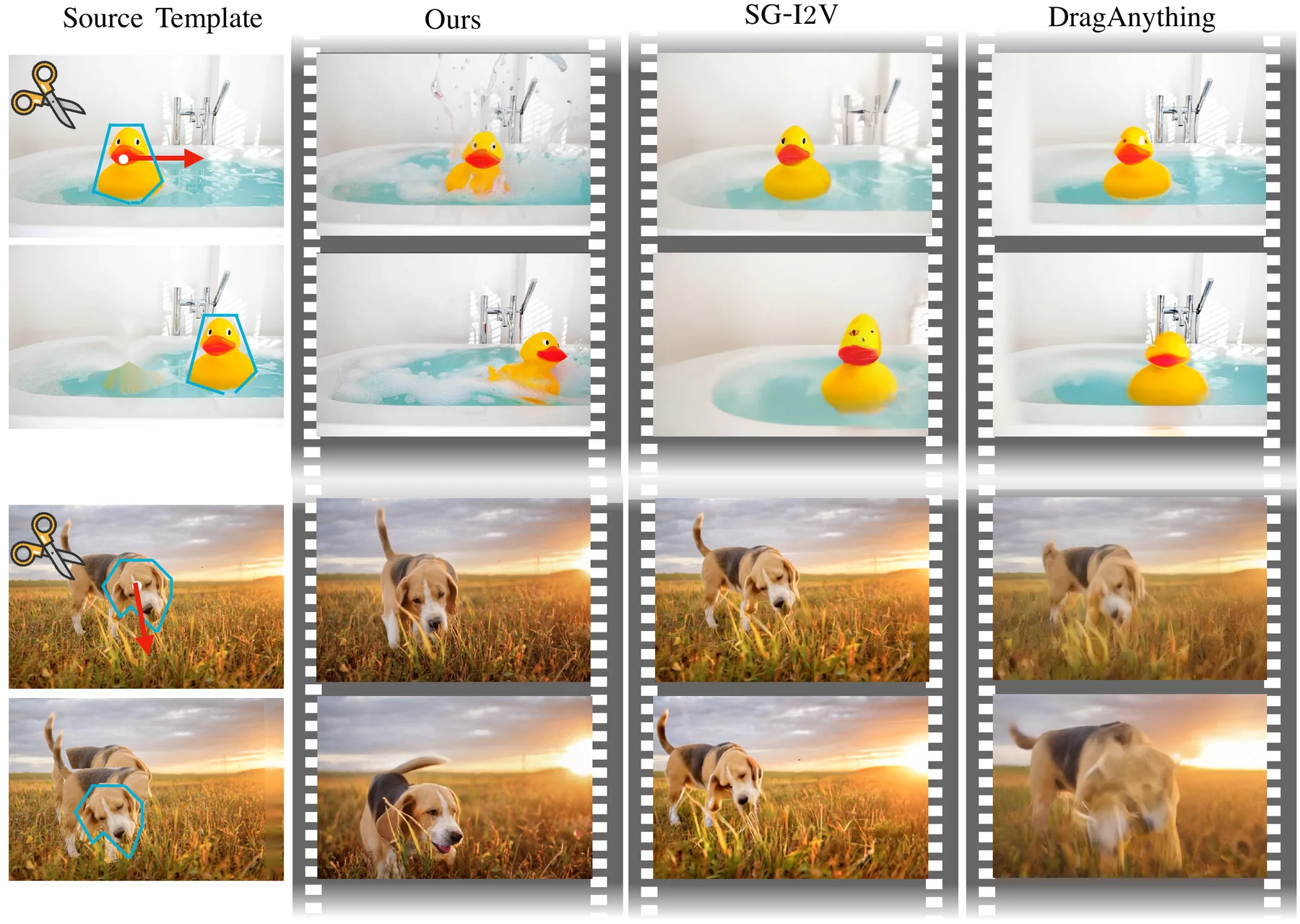
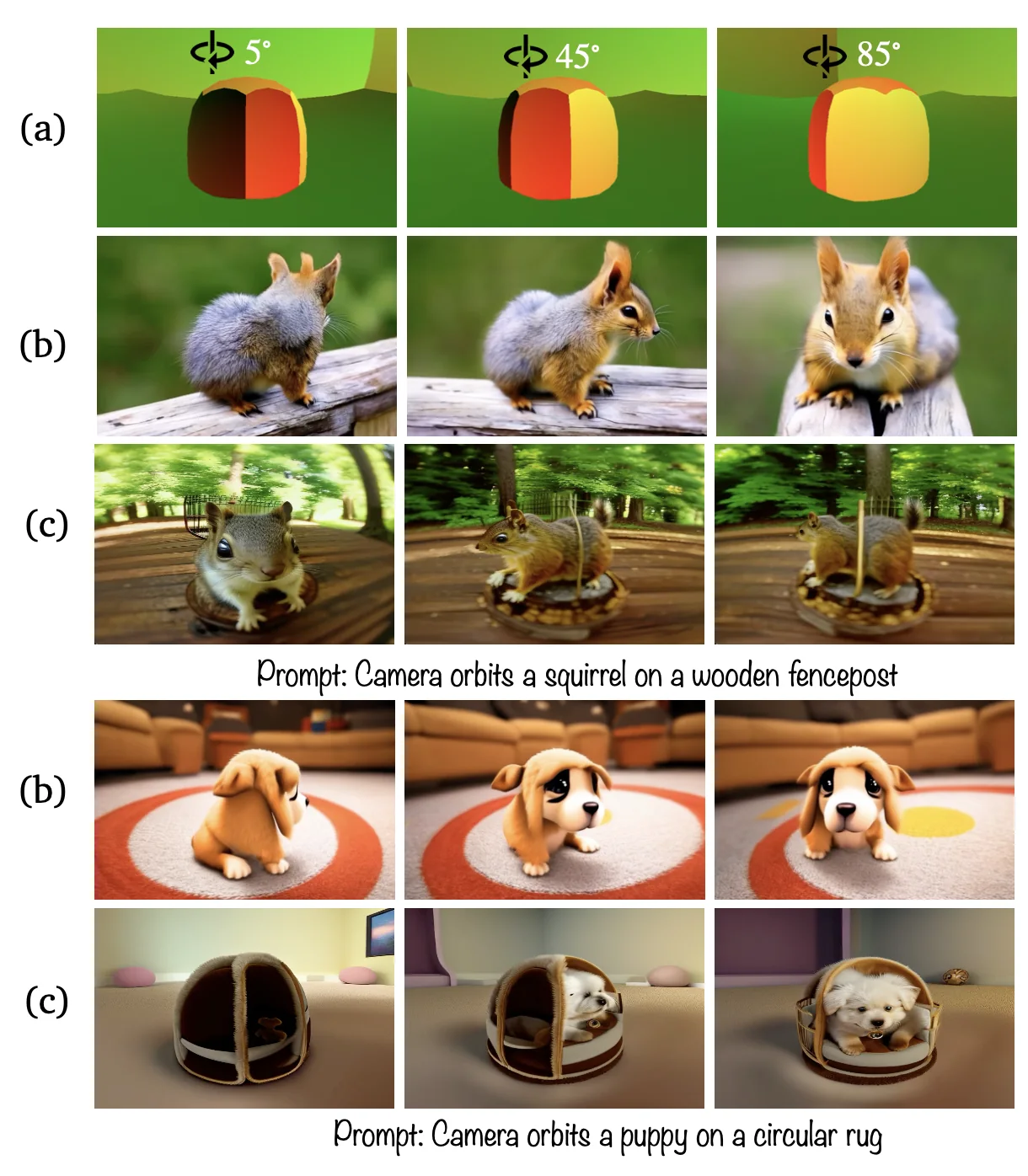
Table 2 · Motion transfer 与 camera movement
| 方法 | FID ↓ | CoTracker box mIoU ↑ | Pixel MSE ↓ | CLIP-text ↑ | CLIP-image ↑ | FVD ↓ | Subject ↑ | Background ↑ | Motion smoothness ↑ | Temporal flicker ↑ |
|---|---|---|---|---|---|---|---|---|---|---|
| Motion transfer T2V · DAVIS 43 | ||||||||||
| DMT | – | 0.85 | – | 0.31 | 0.95 | – | 0.86 | 0.92 | 0.94 | 0.91 |
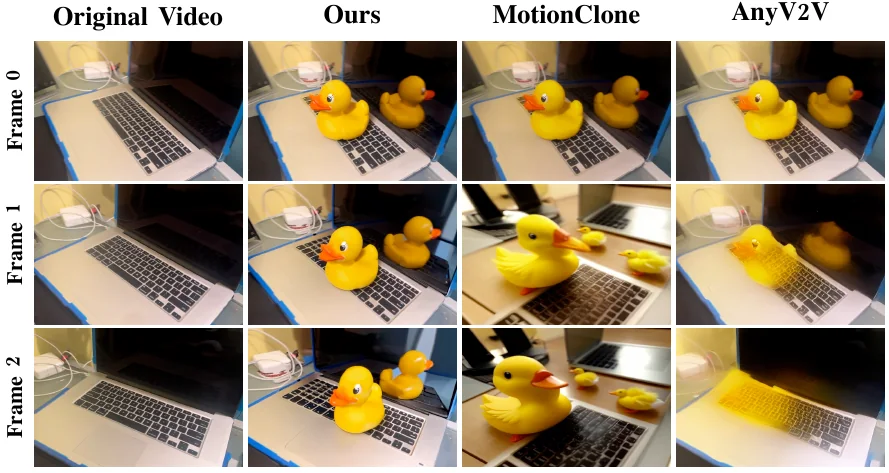
| MotionClone | – | 0.75 | – | 0.32 | 0.93 | – | 0.78 | 0.89 | 0.86 | 0.81 |
| Ours | – | 0.70 | – | 0.33 | 0.98 | – | 0.88 | 0.93 | 0.97 | 0.89 |
| Motion transfer I2V · DAVIS 43 | ||||||||||
| MotionClone | 99.41 | 0.72 | 0.068 | 0.31 | 0.94 | 1839.13 | 0.75 | 0.85 | 0.92 | 0.87 |
| Ours | 78.62 | 0.74 | 0.053 | 0.31 | 0.97 | 1211.37 | 0.88 | 0.92 | 0.98 | 0.93 |
| Ours (prompt only) | 76.62 | 0.52 | 0.088 | 0.31 | 0.96 | 1357.46 | 0.85 | 0.91 | 0.96 | 0.92 |
| Camera movement transfer I2V · DL3DV random 100 | ||||||||||
| MotionClone | 82.67 | 0.71 | 0.10 | 0.33 | 0.94 | 1111.92 | 0.74 | 0.85 | 0.91 | 0.86 |
| Ours | 48.41 | 0.83 | 0.046 | 0.32 | 0.97 | 340.06 | 0.88 | 0.92 | 0.97 | 0.93 |
| Ours (LoRA rank 256) | 110.42 | 0.79 | 0.061 | 0.31 | 0.96 | 1200.35 | 0.84 | 0.91 | 0.96 | 0.93 |
| Ours (无 noise degradation) | 55.16 | 0.84 | 0.047 | 0.32 | 0.96 | 453.24 | 0.86 | 0.91 | 0.96 | 0.93 |
| Camera movement transfer I2V · WonderJourney 19 | ||||||||||
| MotionClone | 177.87 | 0.81 | 0.10 | 0.32 | 0.96 | 1928.12 | 0.75 | 0.87 | 0.93 | 0.87 |
| Ours | 128.27 | 0.85 | 0.07 | 0.31 | 0.98 | 1548.53 | 0.82 | 0.91 | 0.98 | 0.94 |
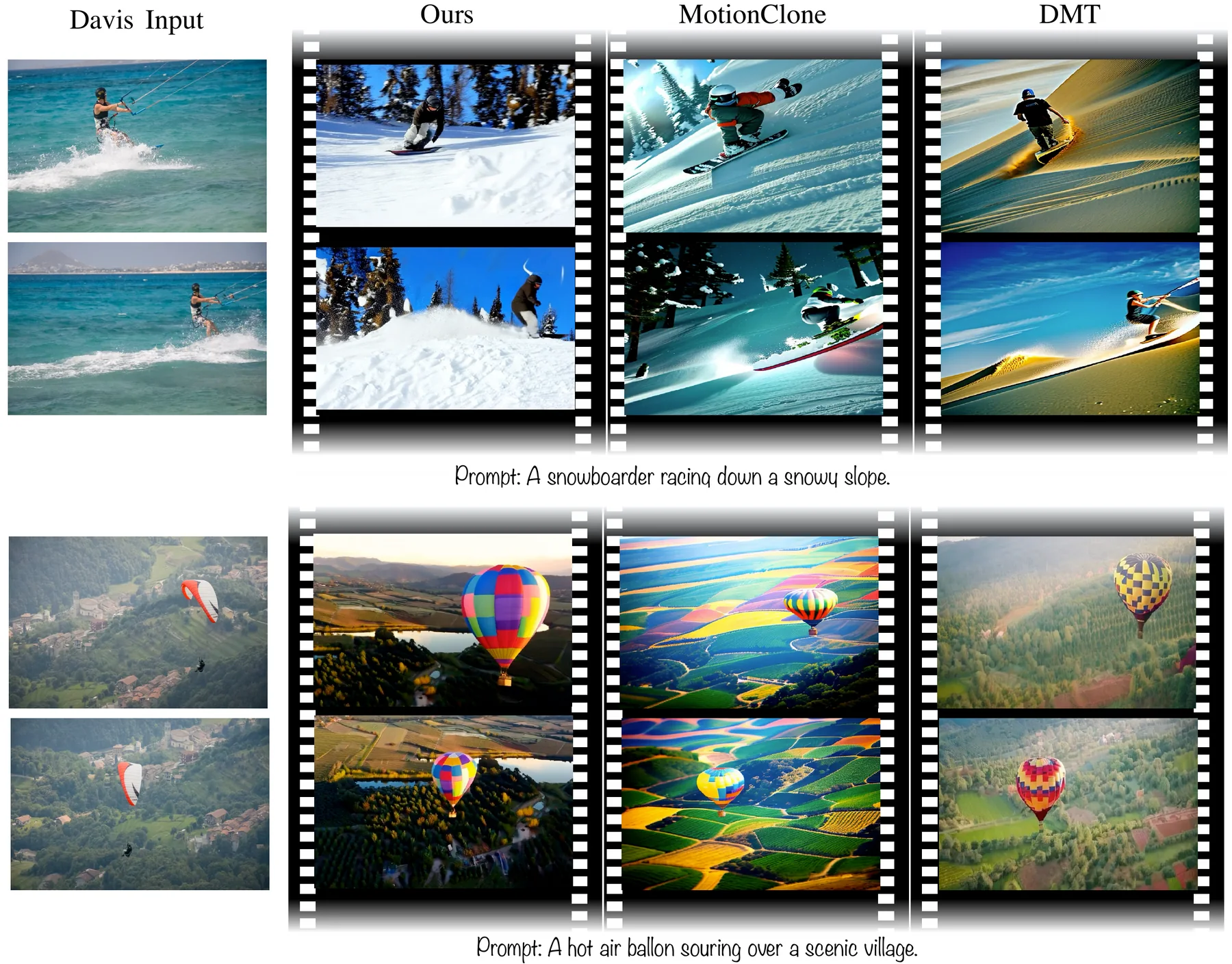
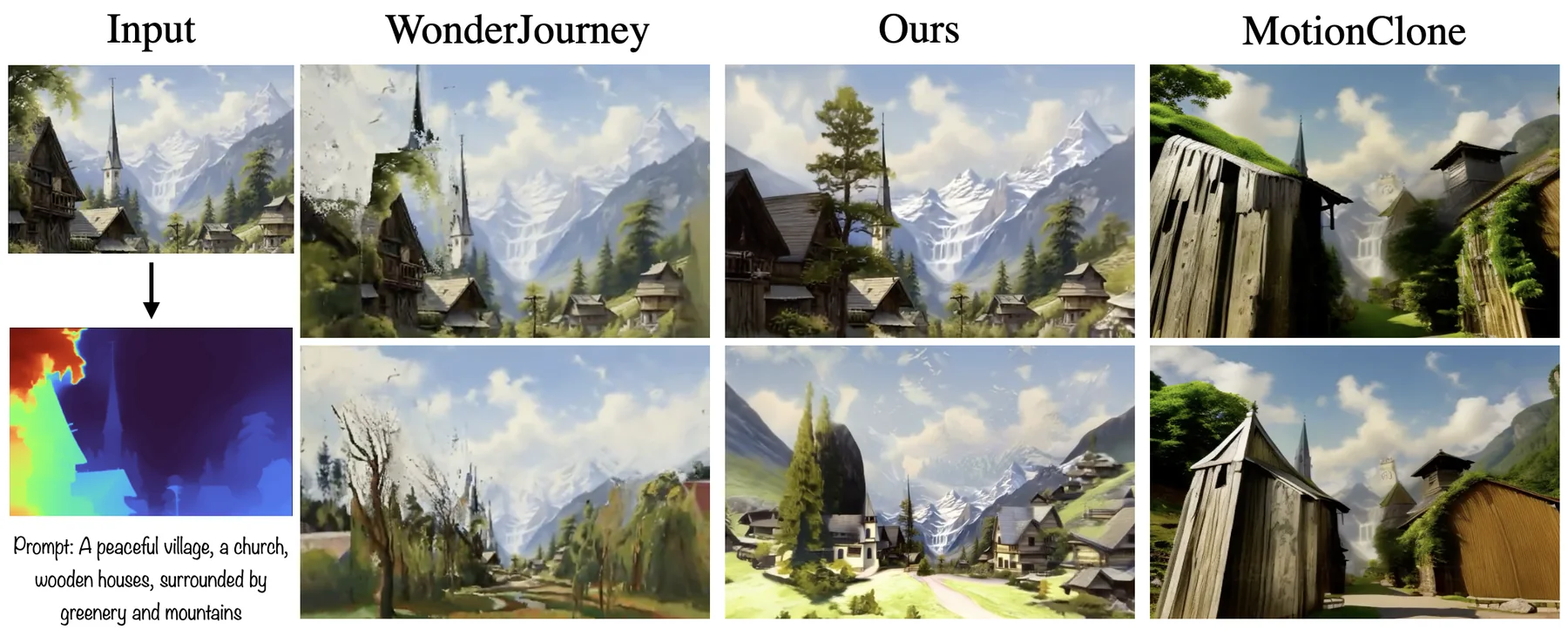
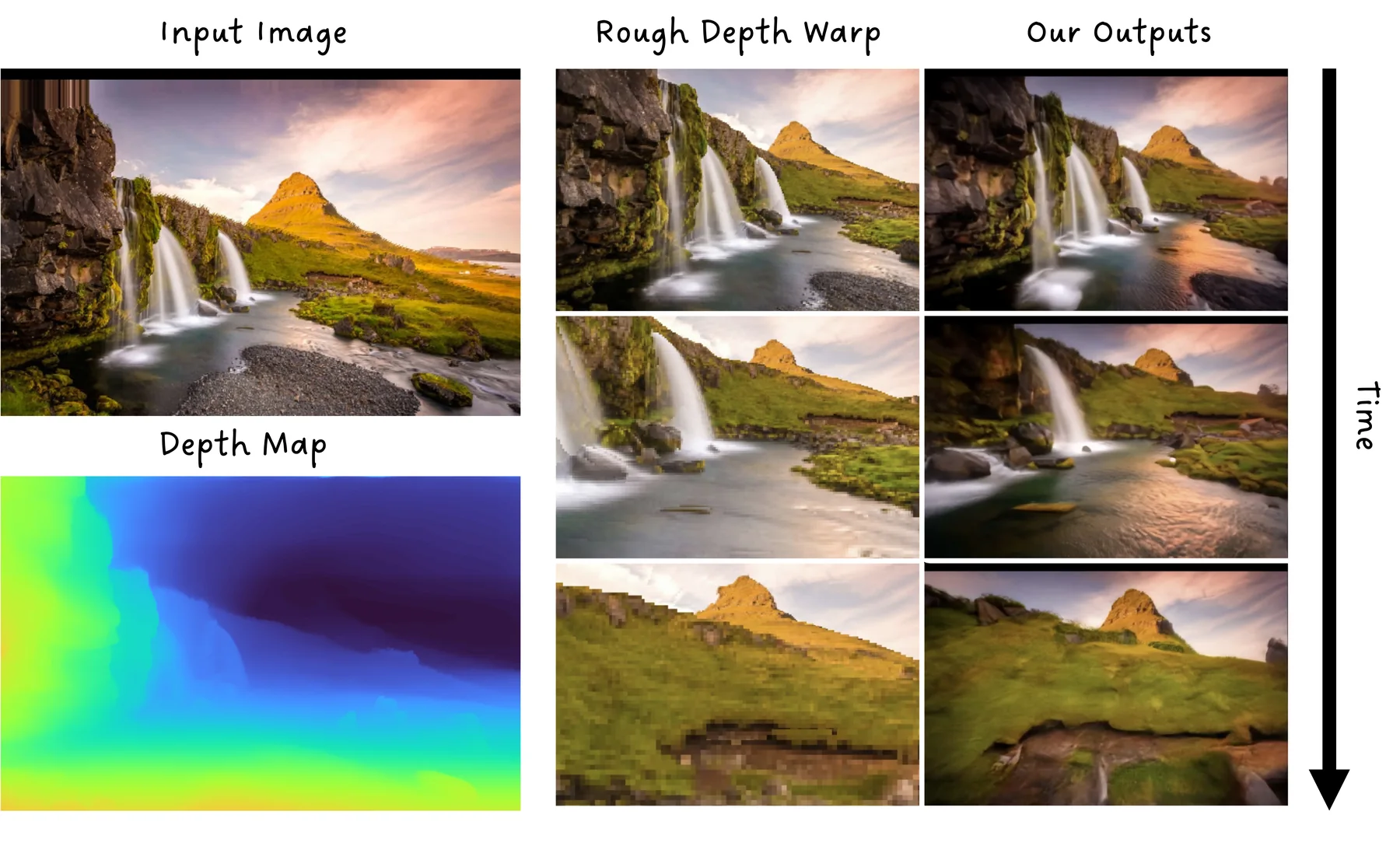
CoTracker 使用 tracking bounding boxes 的 mIoU,与 DAVIS segmentation mask mIoU 含义不同。T2V 中 DMT 的 mIoU 为 0.85,Ours 为 0.70;Ours 优势集中在 CLIP 与 VBench。I2V DAVIS 中 prompt-only 的 FID 76.62 略优于 Ours 78.62,但 motion mIoU 从 0.74 降到 0.52。
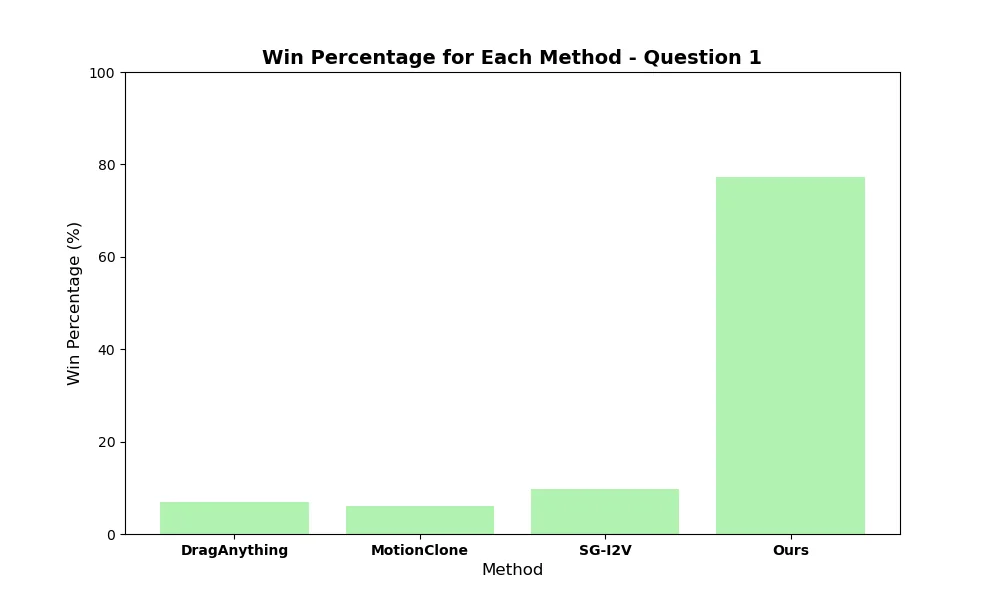
User study · 40 participants
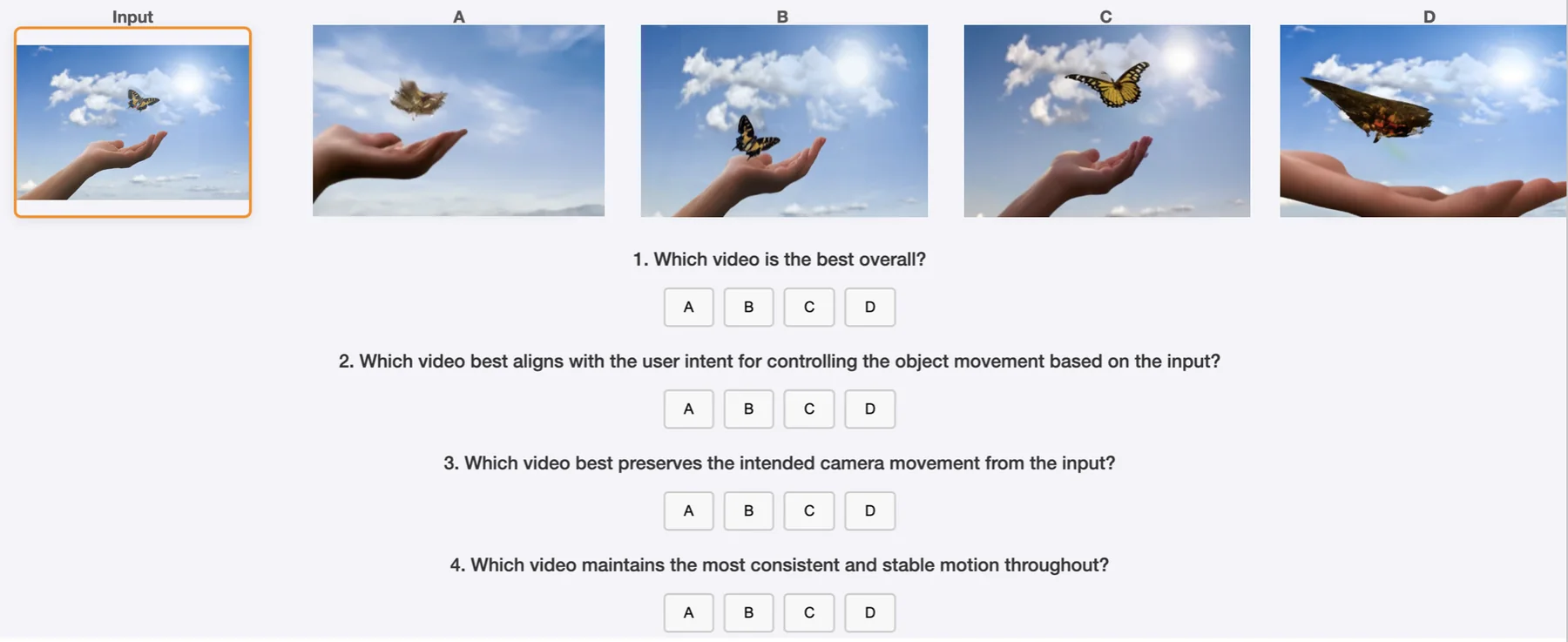
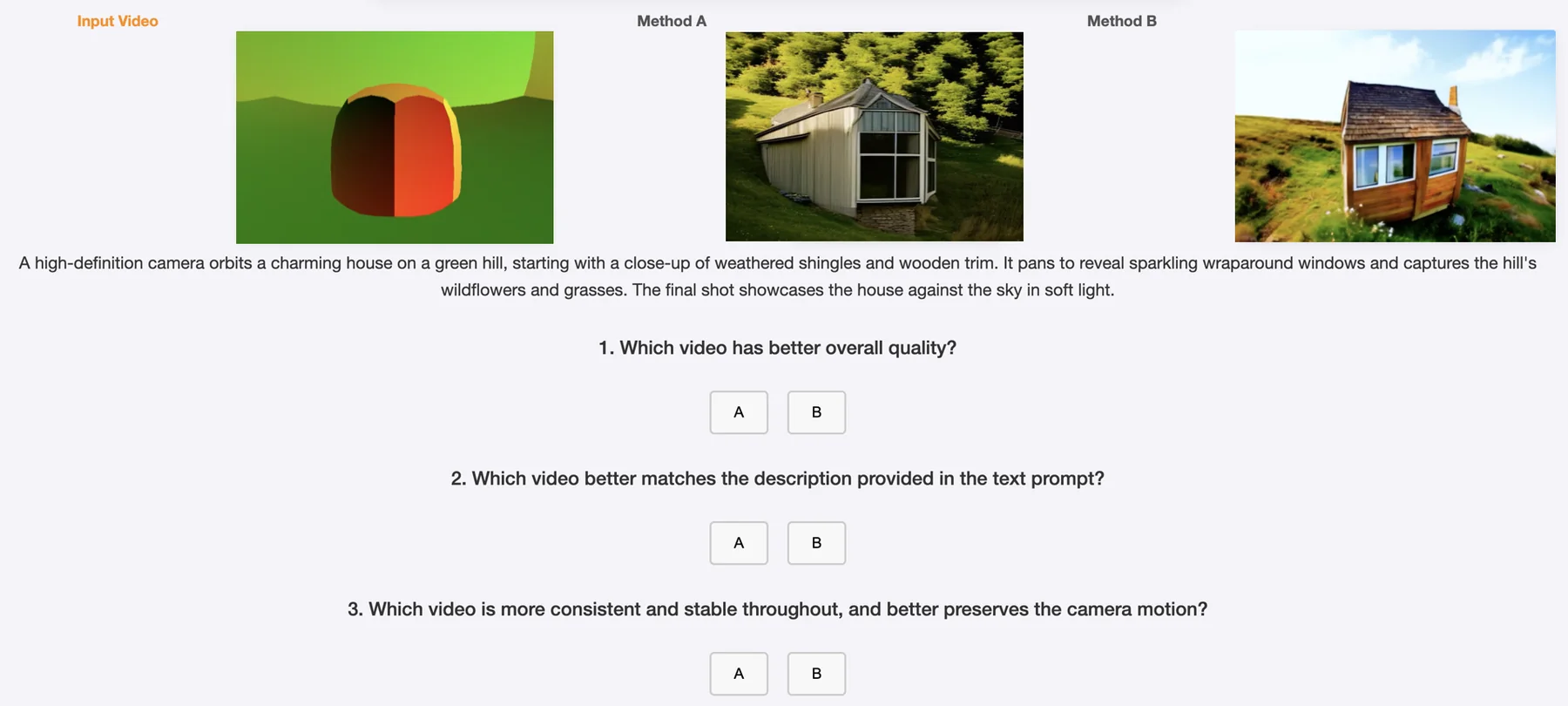
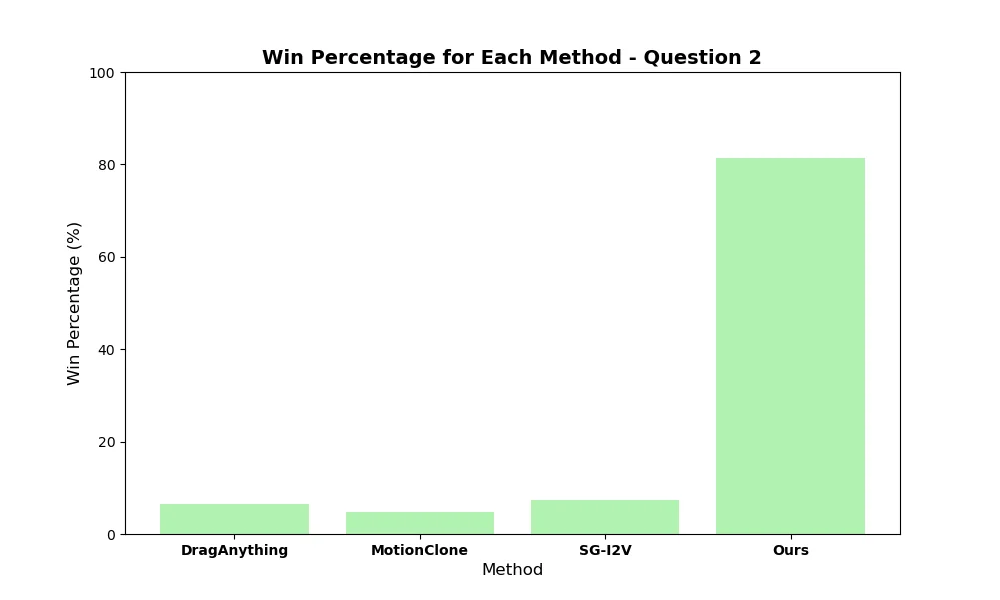
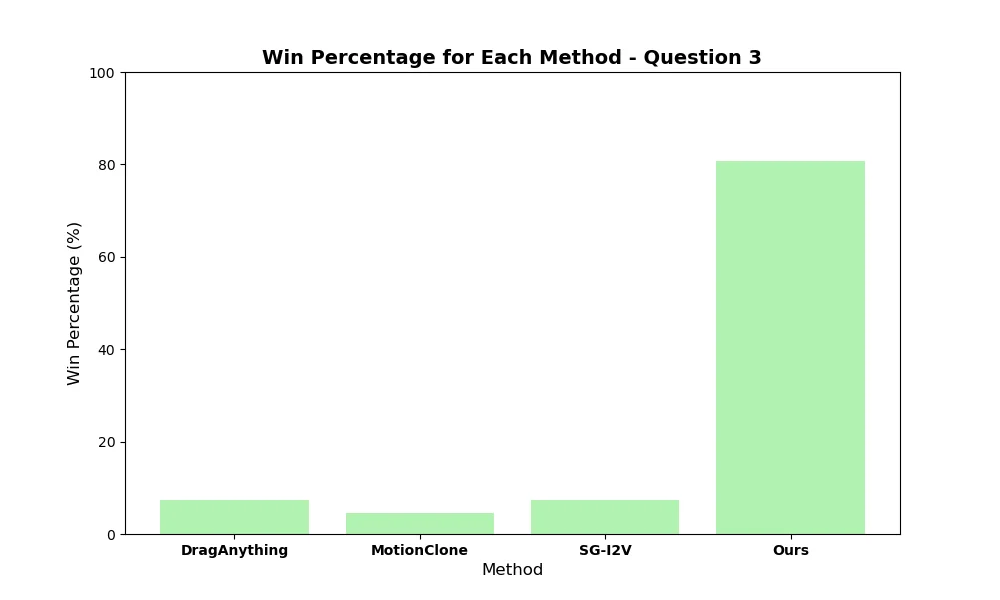
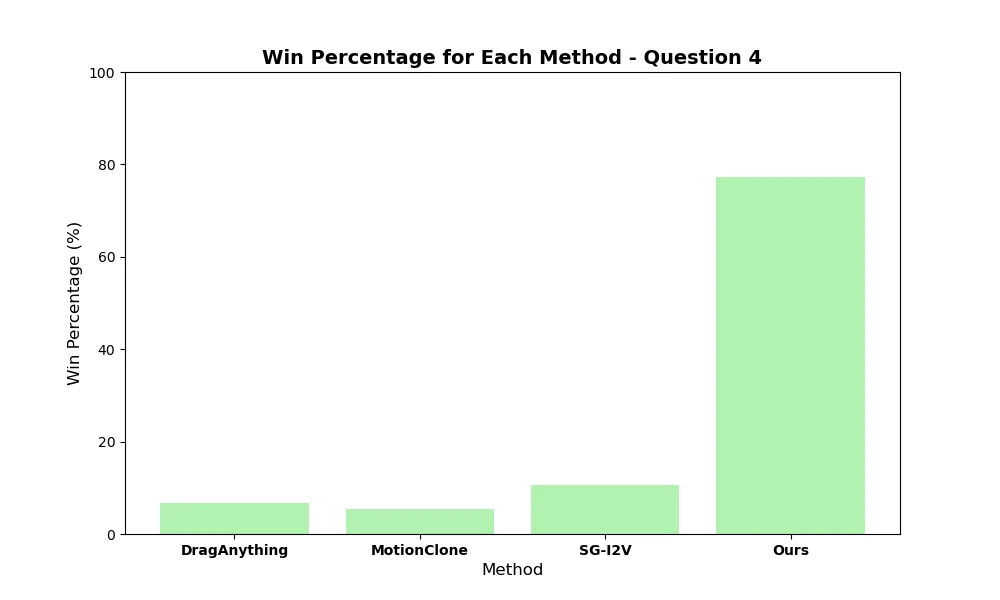
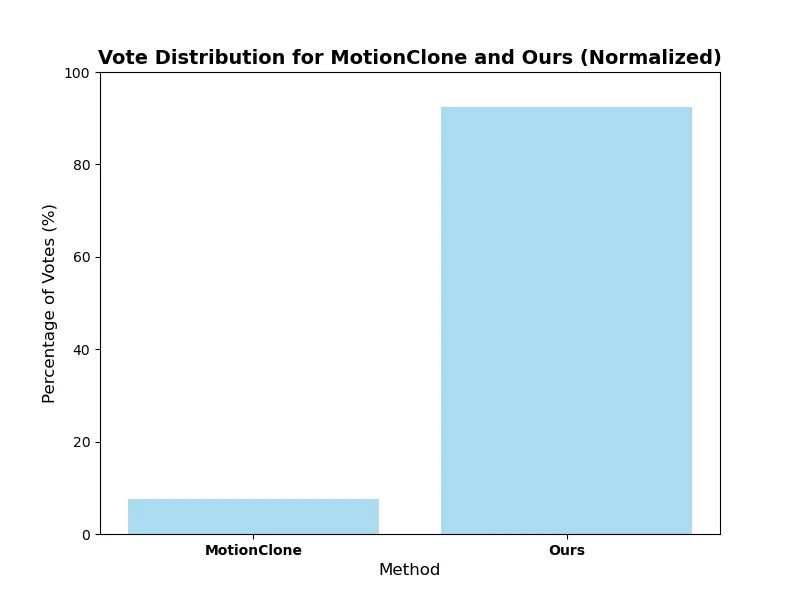
主文报告 local cut-and-drag 的 overall win percentage 为 82%,turnable camera movement 为 90%。论文没有披露每道题的视频样本数、每人比较次数、随机化与显著性检验;40 是参与者总数,图中百分比的 response denominator 无法确定。
附录证明与勘误
\(X_i\) 都是 Gaussian 输入的线性组合,零协方差因此给出独立性;target 再除以 \(\sqrt s\) 得到标准 Gaussian。
Example 1 漏写 target renormalization
附录列出的 expansion noise 对应归一化前的中间量。按照 Algorithm 1 完整执行,\(d=2\) 时得到:
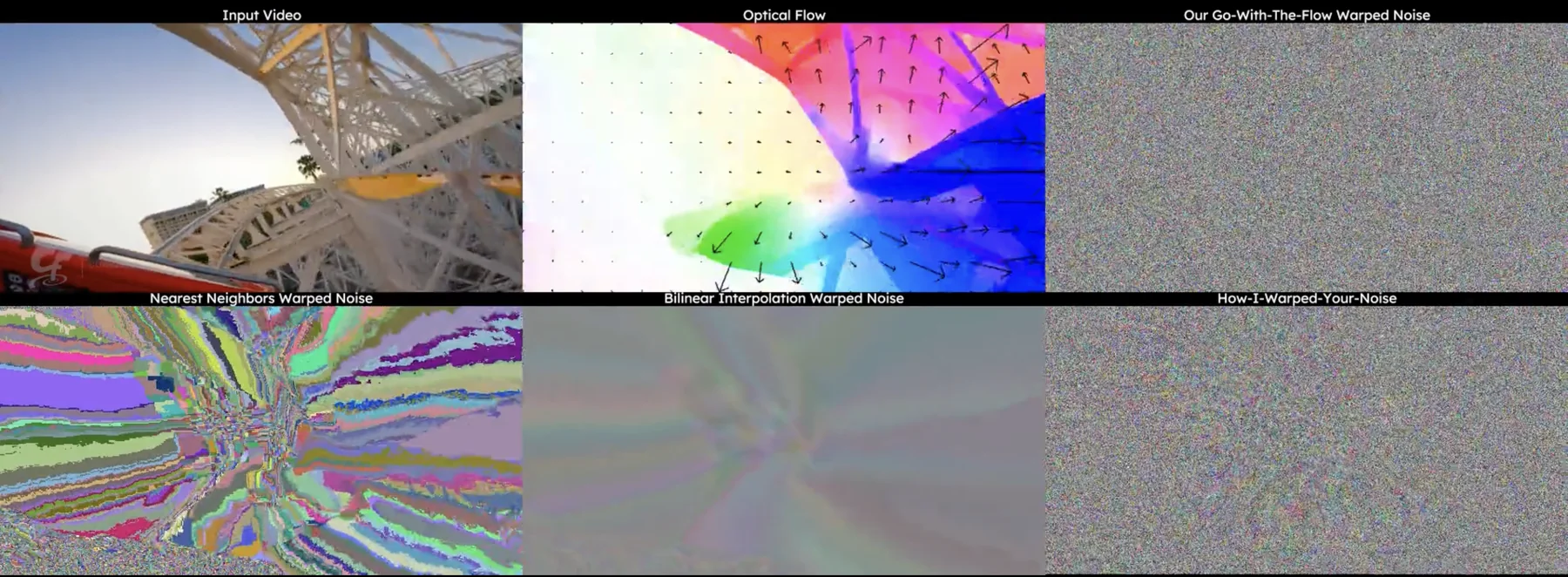
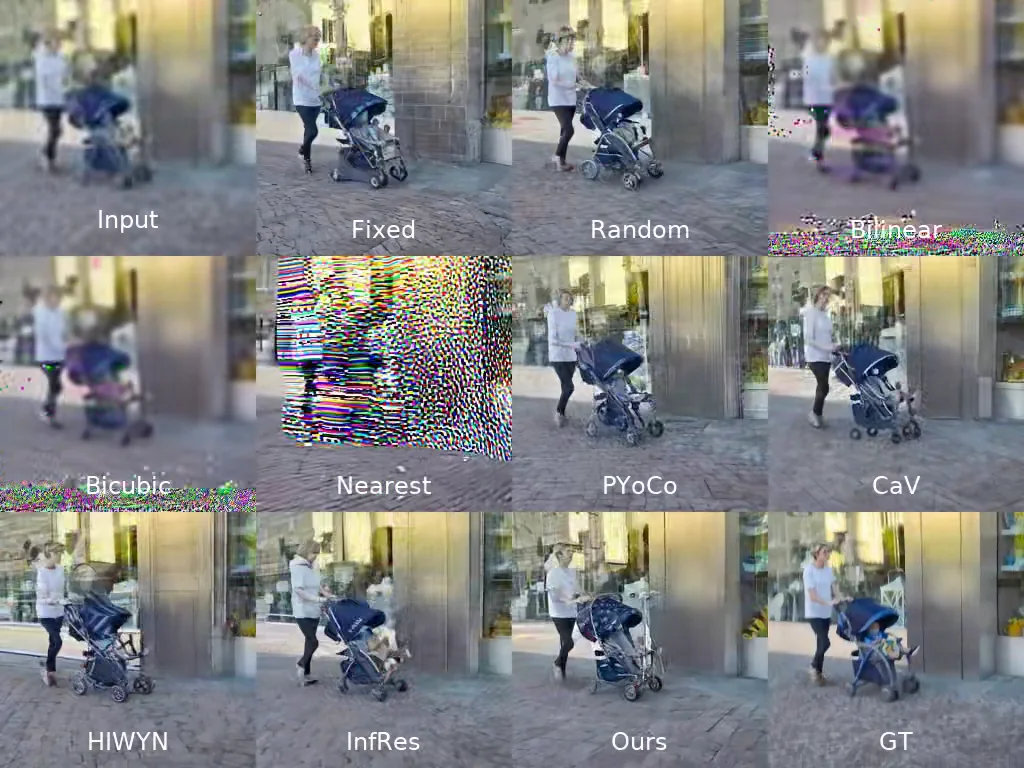
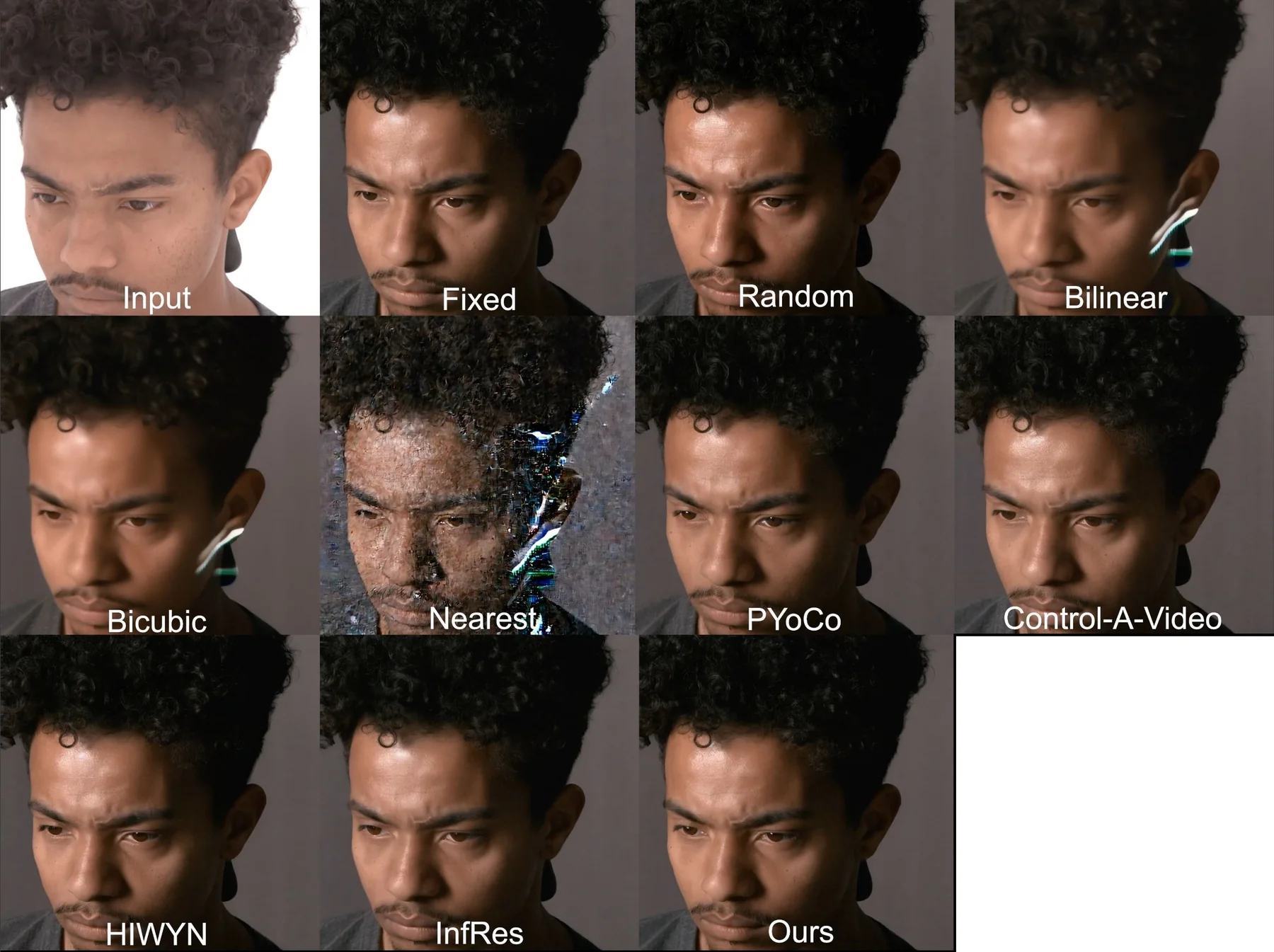
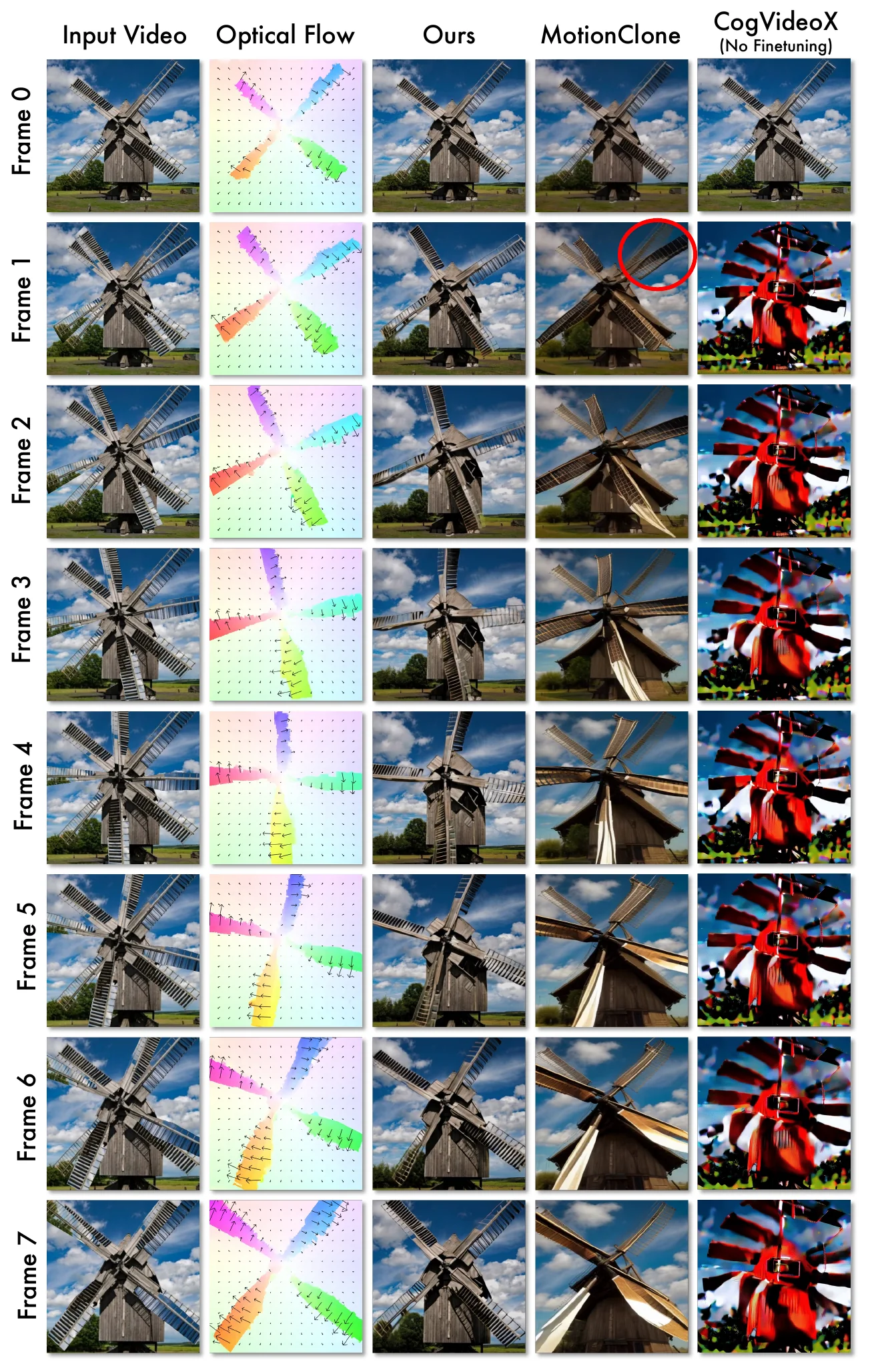
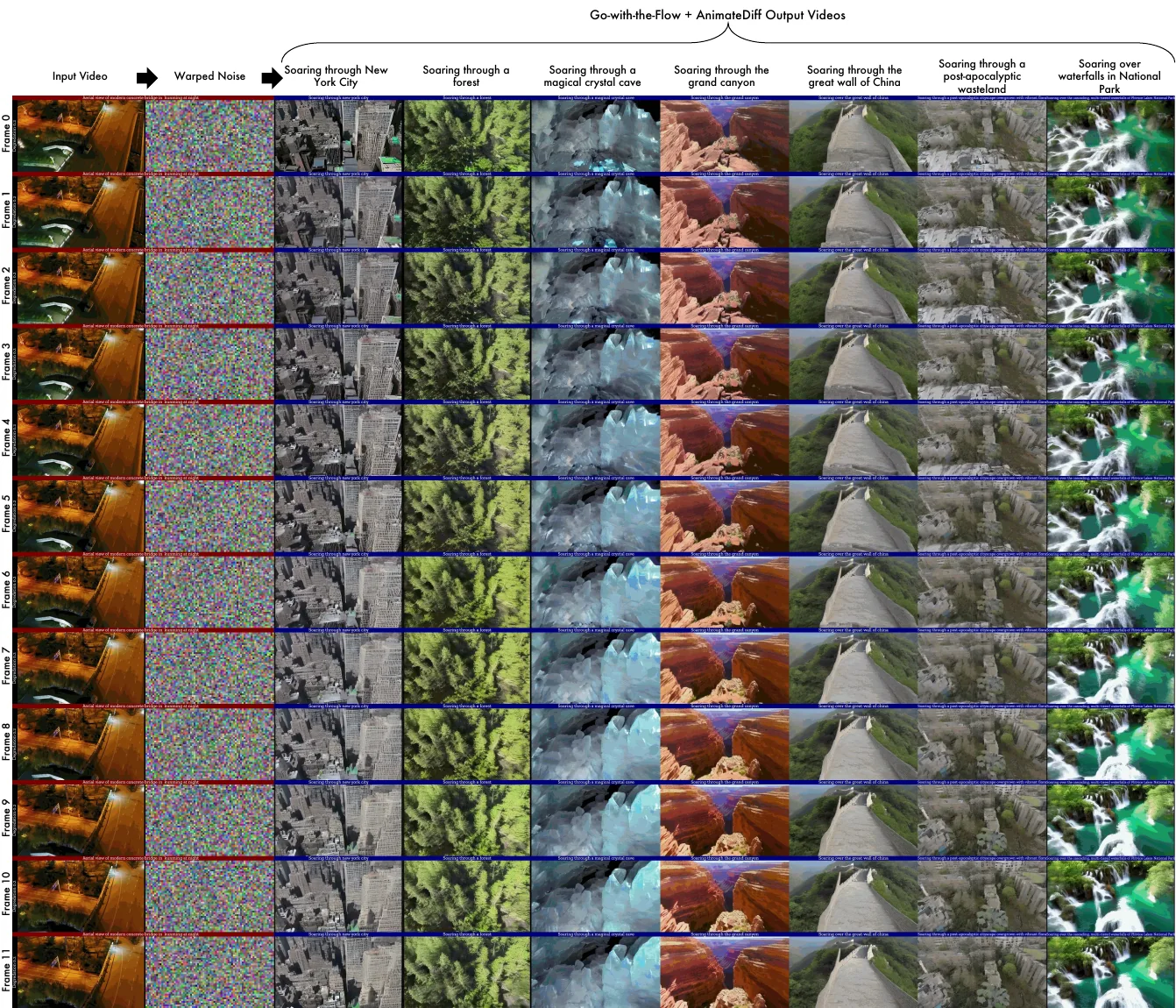
Figure 17 附录不完整伪代码
flow = optical_flow(previous_frame, current_frame)
backward_flow = -flow
mark contraction sources and expansion holes
regaussianize and rebalance density weights
accumulate source particles at destinations
divide by sqrt(sum(weight squared))
merge expansion and contraction regions
Figure 17 是附录中的说明性、不完整伪代码,无法直接执行。它把 backward flow 近似为 forward flow 的相反数,并省略核心 regaussianization 实现;expansion mask 的第二个坐标还写成 \(y+dx\),按语义应为 \(y+dy\)。
官方固定提交审查
审查官方迁移仓库 Eyeline-Labs/Go-with-the-Flow 的提交 018f35148b3afae9bf57aa915d79c4e2d055552c。
公开推理链
- 输入重采样到 49 帧、\(480\times720\),noise channels 为 16。
- 0.5 倍 frame resolution 计算 flow,flow 再放大 8 倍。
- 支持 CogVideoX 2B/5B T2V 与 5B I2V。
- 默认 degradation 0.5、temporal nearest、30 steps、guidance 6、8 fps 输出。
复现缺口
- README 的 fine-tuning code 仍在 TODO。
- 核心 noise warp 通过未固定 commit 的外部 CommonSource 动态获取。
- requirements 没有版本号。
- 公开脚本启用自动安装与远程代码下载。
- 训练 optimizer、schedule、precision 与 seeds 缺失。
005a67a3efdfcb30491515955101d0a8cfdd62d6(2026-05-29)快照,没有导入或执行远程代码;noise_warp.py SHA-256 为 47b35af8940760986dc42c30f2d922ab7bb3fc4d3bd189c160f30d37ebce833d。regaussianize 用第一 noise channel 的浮点值执行 torch.unique 识别同源组,没有保存显式 source ID;浮点精度与重复值会参与分组语义。该快照先 bilinear resize flow,默认 nearest 分支用 round() 将有符号连续位移量化;NoiseWarper.__call__ 把 flow[0] 乘 flowh/oflowh*scale_factor,把 flow[1] 乘 floww/ofloww*scale_factor。默认保持宽高比例的路径不暴露差异;非等比例 resize 时,x/y 分量与 height/width 比例的对应关系需要另行验证。Forward scatter 的越界粒子替换为初始状态,expansion 通过 -F 的 reverse remap 获取,remap 的边界语义由 rp.torch_remap_image 决定。Contraction 使用 scatter-add 聚合,并以平方权重和的平方根归一化;concat density 除以 counts 后调用 nan_to_num(),属于论文外额外数值处理。最终 latent noise 用 area resize、density-weighted 分子与平方 density 分母完成降采样,再乘 scale factor。主仓库没有固定 CommonSource commit,因此此快照证明当前可访问实现的行为,无法唯一重建论文训练时实际获取的历史版本。| 项目 | 论文 | 固定提交与依赖快照 | 影响 |
|---|---|---|---|
| Backward flow | 真实 \(f'\) | 主仓调用 RAFT 相邻帧 flow;CommonSource expansion 用 \(-F\) reverse remap | 遮挡与大运动时不等价于独立估计的 backward flow |
| 空间处理 | \(8\times8\) mean pool × 8 | CommonSource 用 area resize,density-weighted variance normalization 后乘 scale factor | 当前 kernel 已审计,历史依赖版本仍不确定 |
| Flow 量化与边界 | 整数网格位移,允许越界 | bilinear resize 与尺度修正后 round();越界 forward state 被替换为初始化值 | 亚像素位移、边界和 expansion source 受实现规则控制 |
| Density | 按 source degree 分散、target 累加 | 初始化为 1;每步均值归一化、\(10^{-5}\) 偏移与 0.9999 次幂 | 包含论文未披露的长期数值稳定启发式 |
| 时间处理 | 每 4 帧 nearest | nearest、blend、blend_norm、randn | 公开实现含额外分支 |
| Fine-tuning | 30k、rank 2048 | 代码未发布 | 训练数据处理无法复核 |
| Sampler | deterministic,例如 DDIM | Diffusers scheduler 未显式固定 | 安装版本影响配置 |
Reviewer Commentary
表示简洁
密集 motion 写入 initial noise,避开架构修改;算法提供线性边数与单帧 Gaussian 证明。
任务覆盖广
统一覆盖 object、camera、motion transfer、first-frame editing、SR 与 relighting。
指标完整
同时报告 image quality、temporal error、motion fidelity、text alignment 与 ablation。
统计结论过强
有限 K-S 与 Moran tests 无法证明完整分布性质,理论依赖 flow 与当前 noise value 独立。
代码不完整
训练代码缺失,核心库未固定,依赖未锁定。
几何证据有限
没有真实 6DoF camera ground truth,严格相机轨迹保证尚未验证。
Paper Verified Table 1/2、训练设置、用户人数、单帧 Gaussian proof。 Author Claim 任意视频模型兼容。 Our Interpretation proof 条件、Example 1 修正、统计与速度边界。 Research Extension uncertainty-aware degradation 与材质时序生成。
一手来源
- CVPR 2025 Open Access:正式 venue、作者、页码 13–23、paper 与 supplement。
- arXiv:2501.08331v3:22 页合订本与 source。
- 迁移后的官方项目页:CVPR 2025 Oral 与 gallery。
- 官方代码固定提交 018f351。
- DOI 10.1109/CVPR52734.2025.00011。