一条完整流程
采集 → 过滤 → 解释 → 三维结果 → 用户继续绘制。表面表示和界面设计贯穿整个循环。
草图如何变成三维操作:感知、过滤、创建、编辑与交互的完整技术地图
Luke Olsen · Faramarz F. Samavati · Mario Costa Sousa · Joaquim A. Jorge
这篇综述把草图建模理解为「解释用户意图」的问题:同一条二维笔画既可能表示物体边界,也可能表示切割、细节或变形。困难不只在于恢复深度,还在于决定用户现在想做什么,并让解释错误能够被及时发现和修正。
采集 → 过滤 → 解释 → 三维结果 → 用户继续绘制。表面表示和界面设计贯穿整个循环。
Creation 创建、Augmentation 增补、Deformation 变形。它们是笔画意义的分类,不是互斥的系统类别。
Evocative 利用形状记忆与模板;Constructive 按几何规则重建。两者各有边界,混合与迭代是作者强调的方向。
Paper Verified:Luke Olsen、Faramarz F. Samavati、Mario Costa Sousa、Joaquim A. Jorge,Sketch-based modeling: A survey,Computers & Graphics 33(1),85–103,2009 年 2 月,DOI 10.1016/j.cag.2008.09.013。前三位作者署名 University of Calgary,末位作者署名 Instituto Superior Técnico;原 PDF 明确标出 Luke Olsen 为通讯作者,不能套用「末位作者候选」规则。
原文记录 2008-05-22 收稿、2008-09-12 修回、2008-09-30 接受;正式卷期属于 2009。文件仍印有 Article in Press 与 2008 版权,但这不把正式出版年份改成 2008。本次固定阅读用户原 PDF,共 19 页,含参考文献,无另附补充材料。作者说明本文扩充并全面修订自 2008 年 Eurographics state-of-the-art report A taxonomy of modeling techniques using sketch-based interfaces(原参考 [9]),两者不是同一版本。表 1 涵盖 1989–2008 年的 39 个系统/版本条目。
历史范围:全文中的「当前」「近期」「尚未解决」均指该综述写作时的研究状态。本页保留这一时间边界,不把当年的判断当成 2026 年的领域结论,也不把现代生成模型的能力倒写进早期系统。
Our Interpretation:最值得保留的启发不是追求一次猜对所有三维形状,而是把歧义、先验、用户反馈和表示能力一起设计。自然的笔输入并不自动产生自然的交互;稳定、可预期、可修正的结果同样重要。
身份交叉核验:作者研究组出版页、出版社卷期记录与原 PDF 首页。作者页的 PDF 链接本次未能成功读取,实际精读与图表均基于固定原文件。
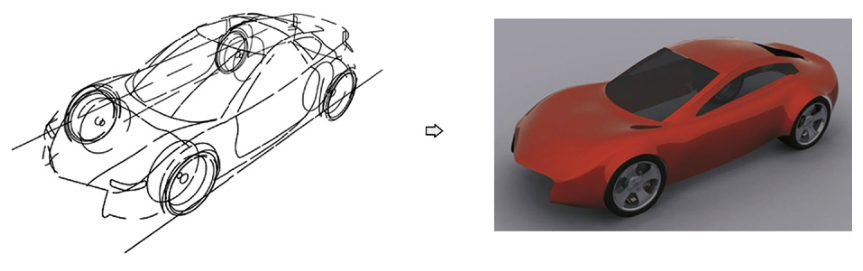
Fig. 1. Creating a 3D model from a sketch requires complex software and an expert user to understand what the sketch depicts and translate that to 3D. SBIM attempts to simplify or automate the process.
传统流程里,设计者先画概念草图,再由熟练建模者解释并手工构造三维模型。SBIM(Sketch-Based Interfaces for Modeling)希望减少这种转换负担,并把草图用于从粗略构形到细节调整的全过程。原文并未主张彻底抛弃 WIMP,而是希望结合窗口、图标、菜单、指针的控制能力与草图的快速表达能力。
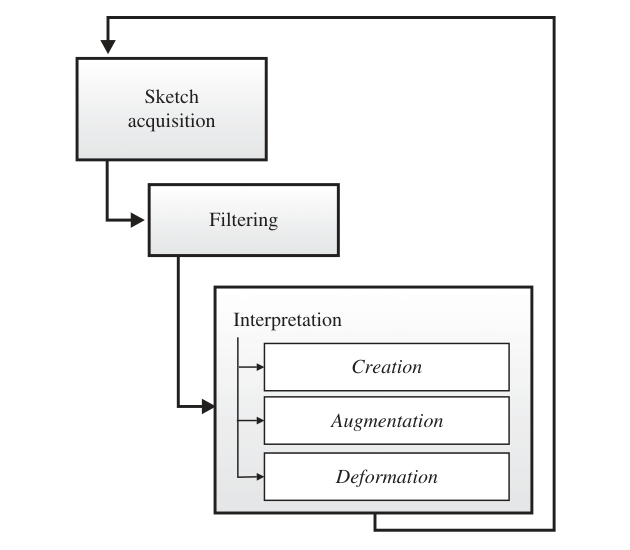
Fig. 2. The SBIM pipeline: after acquiring and filtering the input sketch, the sketch can be interpreted as an operation in 3D.
| 阶段/横向选择 | 输入与输出 | 真正需要解决的问题 | 后续影响 |
|---|---|---|---|
| Acquisition 采集 | 笔或自由手运动 → 点序列、时间、可选压力/方向 | 设备是否保留用户表达的信号;如何映射到绘图平面 | 决定速度、角点、笔顺等信息是否还能使用 |
| Filtering 过滤 | 有噪点与冗余的笔画 → 重采样、平滑、拟合、分段或融合 | 哪些变化是误差,哪些是有意的形状特征 | 过度整理可能在解释之前就删除用户意图 |
| Interpretation 解释 | 过滤后的草图 + 场景/模式/先验 → 建模操作 | 是创建、增补还是变形;选哪种合理三维解释 | 错误既可能来自形状估计,也可能来自操作意图判断 |
| Surface representation 表示 | 参数面、网格、隐式/体积、光顺曲面等 | 拓扑、混合、局部编辑、锐利特征与交互速度的权衡 | 决定哪些操作容易实现、哪些会变得不稳定 |
| Interface 界面 | 反馈、模式、手势、候选列表、直接操作 | 如何暴露能力、澄清歧义并保持用户控制 | 决定算法能力能否被人理解和有效使用 |
综述聚焦交互式、三维几何建模。离线扫描草图虽是可能输入,但缺少笔顺、速度等信号,且更接近单图识别;作者将其排除在主要讨论之外。应用一节提供方向导航,而非对每个应用领域作同等深入的系统综述。
表 1 是以系统为中心的交叉索引,正文则以类别为中心解释机制。它们互补:不能只看表格打点判断某系统的全部能力,也不能把正文的三类操作当成三个独立、不相交的算法家族。
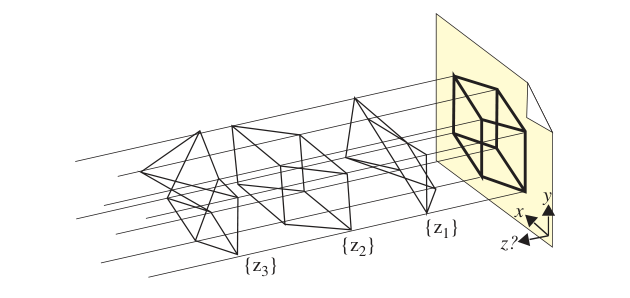
Fig. 3. Ambiguous interpretation of a 2D sketch in 3D: there are infinitely many objects that project to the same 2D input. Reproduced with permission from [11].
即使精确知道一个二维点,它也可能对应沿视线的许多三维位置。以透视相机为例,可把这一自由度写成 \(\mathbf{X}(\lambda)=\mathbf{o}+\lambda\mathbf{d}\):眼点为 \(\mathbf{o}\),\(\mathbf{d}\) 是穿过该像素的射线方向,深度参数 \(\lambda\) 尚未确定。这个公式是本页为说明歧义补充的标准几何表达,并非原文的算法公式。
原 Figure 3 中,多个不同对象都投影成类似立方体的线图。人通常偏好在小幅视角变化下仍稳定的解释,而不偏好只有特殊视点才像立方体的「偶然视图」。这说明感知在使用规则缩小解释空间,而非从图像中读出唯一、完全确定的真实形状。
Recognition 识别问「像什么类别或记忆中的对象」;Reconstruction 重建问「怎样得到它的完整三维几何」。看见汽车轮廓后,人会借助形状记忆推测尺度、对称与不可见部分。模板系统利用类似的记忆,但其可表达范围受到模板覆盖限制;规则重建更直接依赖线条的几何关系,却难以补全任意隐藏结构。
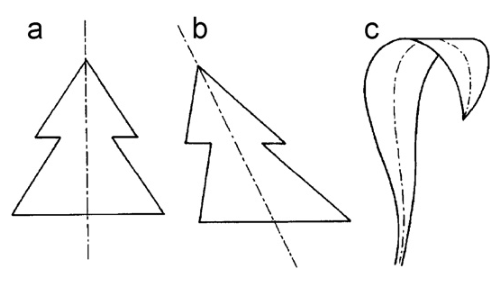
Fig. 4. Three types of symmetry: (a) real; (b) skewed; and (c) generalized (adapted from [14]).
原文讨论三种对称:图像平面中可直接看到轴线的真实对称;由三维对称对象投影得到的偏斜对称;以及轴可为三维自由曲线的广义对称。它们为重建提供额外约束,但检测、建立对应关系及判断是否真的对称,本身仍是问题。不能因为轮廓大致对称,就把所有细节或不可见背面都强制成对称形状。
Our Interpretation:系统最终得到的三维对象通常是「符合输入和所选先验的合理解释」,不应默认是唯一真值。领域限制、默认简单形状和模板记忆都是消歧策略;应让读者知道哪些几何来自观察,哪些来自系统假设,哪些需要用户补充。
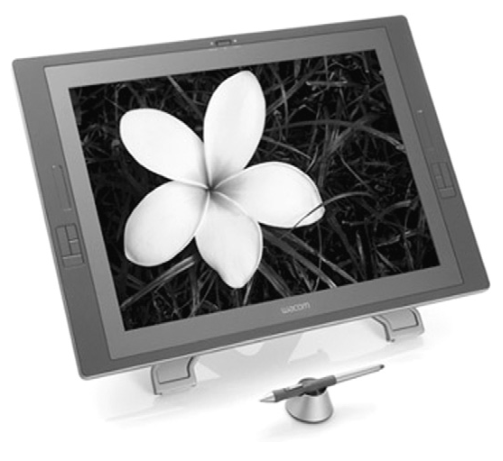
Fig. 5. Input to a sketch-based system is acquired from pen-based or free-form devices such as a tablet display. Pictured: Wacom Cintiq (www.wacom.com).
自由手输入是草图设备的基本特征。鼠标满足最低定义,而将显示与输入结合的绘图屏更接近纸笔动作。设备还可能提供压力、笔方向或触觉反馈;纸张纹理和笔尖摩擦也是传统媒介的一部分。作者同时提醒,追求沉浸的设备可能因机械臂、体积等因素反而降低自然感。这些是历史讨论,不是对当前某款设备的性能测评。
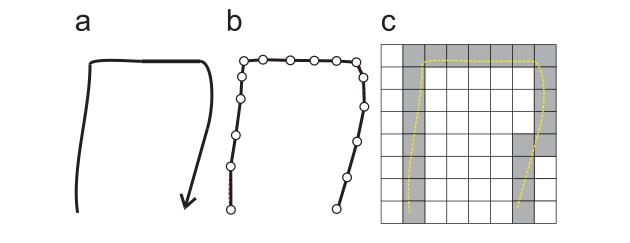
Fig. 6. An input stroke (a) is provided to the application as (b) a sequence of point samples; (c) some applications choose to use an image-based representation.
原文将笔画定义为按时间排序的采样点序列。为强调顺序,本页记为 \(S=(\mathbf{p}_{1},\ldots,\mathbf{p}_{n})\),其中 \(\mathbf{p}_{i}=(x_i,y_i,t_i)\)。落笔与抬笔界定笔画开始与结束;一张草图由一个或多个笔画组成。原文用集合式花括号表示该序列,语义仍明确是 time-ordered sequence。
采样点并非等距离分布。用户通常在转角处放慢速度,点会更密;因此速度与曲率可以一起帮助定位重要特征。反之,把所有点只当成静态像素,会丢掉笔顺、时间、压力等信息。原文称栅格笔画具有固定内存和自动融合的好处,其含义是在既定画布分辨率下使用固定栅格,并不意味着任意分辨率都占同样内存。
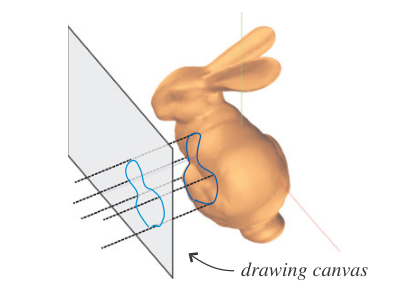
Fig. 7. Sketches are embedded into 3D by projecting onto a drawing canvas, or perhaps onto existing geometry.
| 定位方式 | 获得的约束 | 仍然缺少什么/代价是什么 |
|---|---|---|
| 固定或用户指定平面 | 把二维坐标投影到某个三维平面 | 平面内笔画确定,不代表物体离开该平面的形状已确定 |
| 当前视图平面 | 可随视角改变从不同方向绘制 | 深度仍需额外约束;旋转视图不自动提供同一曲线的对应关系 |
| 已有模型表面 | 射线求交或反投影将笔画锚定到表面 | 通常依赖可见表面与当前视角;不能任意指定隐藏层 |
| 参考图像辅助 | 用户可描摹图像,系统可吸附到图像边缘 | 参考图提供的是二维线索,边缘是否代表目标几何仍需解释 |
原文也提到利用平面对称假设反转投影来恢复三维曲线。这里的可恢复性依赖额外假设,而不是单条二维轨迹天然拥有唯一深度。对于新手,参考图可以降低绘制负担;对于后续解释,它也引入了需要区分的图像边缘、轮廓与结构线。
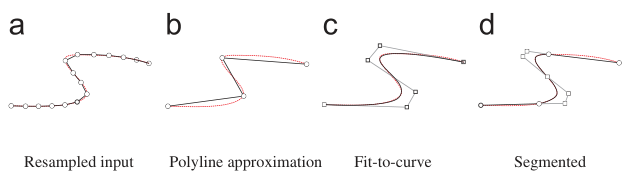
Fig. 8. Filtering operations: (a) smooth uniform resampling; (b) coarse polyline approximation; (c) fit to a spline curve; (d) segmented into straight and curved sections. In each figure, circles denote endpoints of straight-line segments, while squares represent curve control points.
输入误差既来自手部抖动和绘制不准,也来自设备时空量化。原文引用的例子说明,即使采样频率为 100 Hz,快速运动仍可能只留下很稀疏的空间点;所述 4–5 dpi 与扫描的 1200–2400 dpi 是被引历史情境,不能用来概括现代绘图板的物理分辨率。
| 操作 | 原文涉及的方法 | 解决的问题 | 主要风险/边界 |
|---|---|---|---|
| Resampling 重采样 | 距离阈值丢弃过密点、插值补稀疏点;在线或笔画结束后进行 | 不均匀点距、后续比较与计算负担 | 没有依据角点分配样本时,容易损坏局部特征 |
| Polyline approximation 折线近似 | 规则下采样、统一边长、误差有界的 minimax 等 | 用少量点表达大致轮廓 | 任意保留每隔若干点可能丢掉拐角;应考虑最大近似误差 |
| Smoothing 平滑 | 邻域均值、Gaussian 滤波 | 抖动与采样噪声 | 真实不连续、尖角和细节也可能被平滑 |
| Curve fitting 曲线拟合 | 最小二乘多项式、Bézier、B-spline、细分曲线、变分隐式曲线 | 简化、去噪、为后续构面提供可控表示 | 计算和表示选择不同;光滑曲线并非所有输入都适合 |
| Segmentation 分段 | 速度极小、曲率极大定位角点;直段拟合折线,弯曲段拟合曲线 | 同时含直线和曲线的笔画 | 速度不是意图的唯一证据;困难位置可能需要用户确认 |
| Primitive fitting 基元拟合 | 将局部形状拟合为线、圆弧、椭圆、方形等 | 提高语义层面的比较与工程约束能力 | 分类错误会把本来有意的不规则形状强制规则化 |
| Beautification 美化 | 跨笔画推断共点、平行、垂直、对称等关系 | 将局部形状组织成一致的全局几何 | 约束可能冲突或传播;批处理比逐步交互更难处理 |
具体例子包括:Sezgin 等结合速度与曲率先建折线,再对高误差段拟合三次 Bézier;Alexe 等用 Haar 小波得到多尺度笔画;Cherlin 等用逆 Chaikin 细分去噪;Schmidt 等通过几何约束拟合变分隐式曲线。它们是综述列出的不同技术选择,不是一条要求全部串联的标准实现。
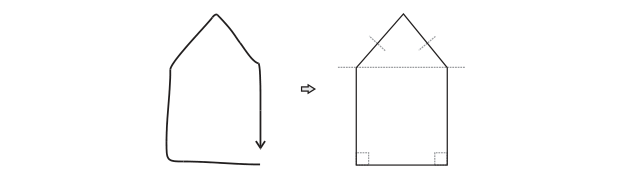
Fig. 9. Beautification infers global geometric constraints between strokes, such as parallelism, symmetry, and perpendicularity.
美化与局部拟合应分清:把四段线各自拟直,只处理单条笔画;进一步推断相邻边垂直、对边平行,才改变了跨笔画的关系。其价值来自对用户意图的推断,风险也来自同一个推断。
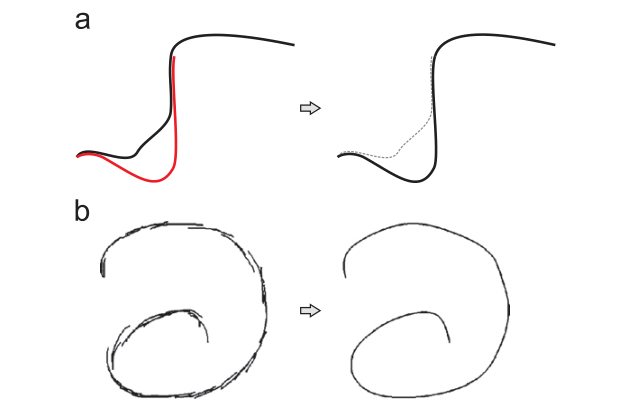
Fig. 10. (a) Oversketching is a quick and effective way to interactively correct a sketch; (b) oversketched strokes can be blended in a batch process after sketching is complete (reproduced with permission from [50]).
纠错式重描:用户在不满意区域重画,系统定位受影响段,拼接新旧笔画并平滑连接。它可发生在二维解释前,也可在保留原轮廓约束的三维编辑中使用。聚合式重描:艺术家用许多重叠的短线共同表达一条轮廓,系统需把这些笔画融合,而不是将最后一条当成替换命令。
原文区分几何笔画空间中的融合、图像表示自带的叠加,以及用户指定可融合笔画的半自动方式。Pusch 等利用层次空间划分形成局部可定向片段,再拟合 B-spline。两种重描若混淆,系统就可能把探索线当作修正,或把明确修正平均回旧结果。
Our Interpretation:过滤不是无损的清洁步骤,而是一轮较早发生的意图推断。应保留原始输入或可逆的关联,使用户能纠正错误拟合;这条工程建议是本页分析,并非原文提供了统一撤销机制。
Evocative 系统先辨认笔画对应的内置形状,再生成或调用相应模型。其优势是已知形状可以补足输入中没有明确表达的三维信息;其限制是模板集合、模板参数和匹配方法决定了可表达范围。它并不必然只是原样复制对象,也可能对模板作变形或组合。

Fig. 11. An iconic evocative-stroke system extrapolates a 3D form from only a few evocative strokes.
SKETCH 用笔画组合描述基元,例如三条在一点相遇的直线可被解释为长方体的三个方向和尺度。这里的笔画兼具参数与命令作用,因此与通过菜单选择建模命令并非完全不同。GIDeS 扩充了基元与工程参数化模板;Chateau 限制在建筑形态,使平面性、对称、正交等假设更可信,并通过逐笔反馈降低识别复杂度。
Iconic 的「少画几笔」是以共享语法为前提的。用户必须知道哪些笔画组合能触发什么操作;少输入不自动意味着低学习成本。若系统对形状的解释依赖特殊笔顺或构图,界面应使这套约定可发现。
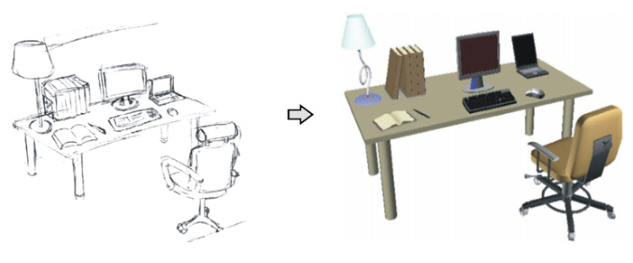
Fig. 12. A template retrieval system matches sketches to 3D models, useful for applications such as scene construction. Reproduced with permission from [74].
模板检索需要匹配二维草图与三维对象。直接在三维中比较将要求先解决重建问题,因此常见策略是把三维候选投影成二维轮廓,再在二维特征空间比较。原文也提到图匹配等其他路线。
此式是本页对投影检索思路的示意归纳:\(M_j\) 是候选模型,\(v\) 是候选视角,\(\Pi_v\) 生成二维表示,\(\phi\) 提取描述,\(D\) 比较相似度。它不是综述给出的统一目标函数,也不暗示各系统使用相同特征或求解器。
| 原文代表系统 | 模板/表示 | 匹配及交互流程 | 具体限制 |
|---|---|---|---|
| Funkhouser 等,3D Search [63] | 每个对象取 13 个视点轮廓,形成固定长度、旋转不变的图像描述 | 输入草图作同样处理;用户可画最多三个不同视图以改进检索 | 图像处理丢失时间和压力,但能容纳碎片式草图;多视图依然要有有效对应/匹配 |
| Magic Canvas [74] | 每对象 16 个轮廓,Fourier 方法比较 | 用户指定子草图并选择候选;系统调整朝向、尺度并推断简单场景关系 | 场景不是一次全自动理解;用户分割与候选选择参与了消歧 |
| Yang 等 [26] | 程序描述的参数化模板,如用基元构造杯子 | 变形模板以匹配草图,不只是实例替换 | 可调性更强,但增加模板需要编写程序描述,比加入一个网格更困难 |
| Lee 与 Funkhouser [77] | 从完整对象模板转向部件模板 | 在已有模型附近画部件轮廓,检索、人工选择,再自动相对放置并合成 | 组合空间扩大,仍依赖部件库和匹配/连接机制 |
Our Interpretation:该分支把一部分困难从「推断任意三维几何」转移到「建立、检索和调整一个足够合适的形状空间」。模板命中后形状看起来精确,不等于系统准确恢复了用户未画出的独特细节。评估应同时考虑库覆盖、候选排序、用户选择成本和模板调整能力。
工程设计系统常将输入线段当作三维线框的边、相接端点当作顶点,并作平行投影等假设。识别平面性、正交、等距与角点关系后,求解尚未确定的深度。原文以 Lipson 与 Shpitalni 的优化路线作为代表;这不是单凭每个顶点的二维坐标就能唯一求深度,而是由领域约束缩小候选空间。
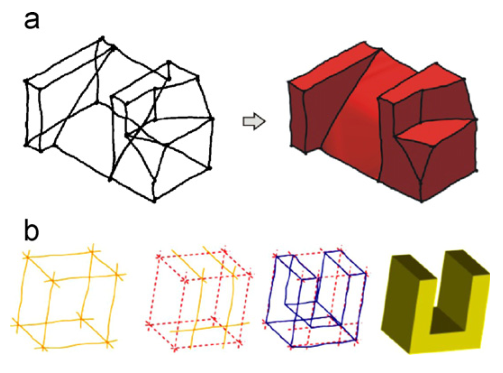
Fig. 13. Engineering design systems exploit domain-specific knowledge to reconstruct quite complex sketches: (a) a batch reconstruction system (reproduced from [11]); (b) an interactive system (adapted from [48]).
Line labeling 将线分成凹边、凸边或轮廓边,据此约束几何。顶点、拐角和边的可靠识别很关键;交互系统可以在绘制过程中收集这些信息,再批量重建。对称可进一步减少搜索空间,但检测并不简单。
弯曲边需要额外处理。Varley 等的两阶段方法先用直线得到总体结构,再让用户重画曲线;第一阶段结果成为第二阶段的支架。Masry 与 Lipson 也采用分阶段思路,但直线化由自动分段完成,对用户隐藏。不能把「两阶段」理解为用户参与程度完全相同。
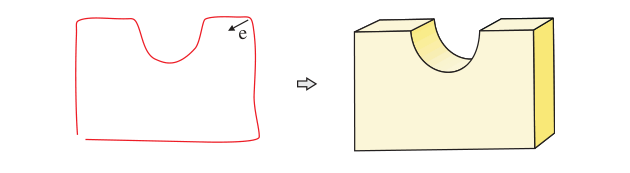
Fig. 14. Extrusion is a simple method for reconstructing a contour, by sweeping it along an extrusion vector e.
交互挤出则把轮廓沿向量或路径扫掠成曲面。最简单的直线挤出可示意为 \(\mathbf{X}(u,v)=\mathbf{c}(u)+v\mathbf{e}\),其中 \(\mathbf{c}\) 是轮廓、\(\mathbf{e}\) 是挤出方向。这是解释图 14 的几何表达,不涵盖带随动坐标架的任意弯曲扫掠。它可产生方形挤出的硬边结构,也可用圆形成圆柱。用户指定方向有命令性质,但轮廓并不限于预存模板,因此体现了两类创建路线的交叠。
许多自由形系统把笔画当成曲面的轮廓。原文的 contour 不只指物体最外圈的 silhouette,也可包含鼻子、下巴等内部可见轮廓。直观条件是曲面法线与观察方向垂直;本页写作 \(\mathbf{n}(\mathbf{X})\cdot\mathbf{v}=0\)。透视情形中观察方向应随位置变化,这个条件也不自动判断该点是否被其他表面遮挡。
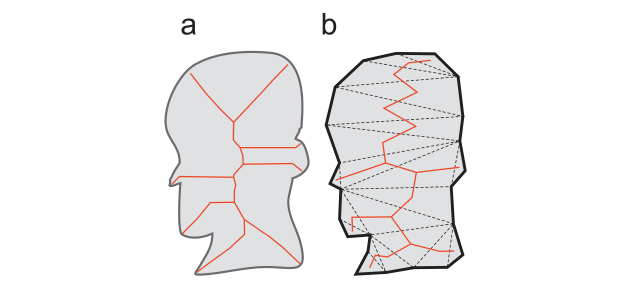
Fig. 15. The skeleton of a contour is often used to create a smooth 3D object: (a) the true skeleton; (b) the approximated skeleton (chordal axis) from Delaunay triangulation.
骨架方法用轮廓内部的中轴结构组织体积。中轴点具有不止一个最近边界点,局部边界距离可作为厚度线索。精确骨架可能昂贵,弦轴变换利用多边形的 Delaunay 三角剖分连接相邻内部三角形的中心,得到近似骨架。原文同时指出改进骨架可减少伪分支、提高光顺度;骨架并非只要提取出来就必然稳定。

Fig. 16. Free-form model creation from contour sketches: (a) rotational blending surfaces have non-branching skeletons [40]; (b) Teddy inflates a sketch about its chordal axis (reproduced with permission from [29]); (c) SmoothSketch infers hidden contour lines (green lines) before inflation (reproduced from [55]).
| 路线 | 输入假设与构造 | 代表工作 | 边界 |
|---|---|---|---|
| 旋转面/旋转混合面 | 围绕轴旋转轮廓,或由两条曲线间的中轴构造广义旋转混合 | Eggli 等、ShapeShop、Cherlin 等 | 简单构造常假设共面输入、非分支骨架,单片参数拓扑有限 |
| 对称曲线重建 | 利用偏斜或广义对称与额外对应信息恢复曲线,再以曲面连接 | Tanaka 等、Kanai 等 | 需要对称假设与可识别的对应;不是无约束单图恢复 |
| 轮廓膨胀 | 从简单、无自交的闭合轮廓与骨架生成鼓起的三维形状 | Teddy | 得到合理默认形状,不等于真实形状唯一;复杂遮挡轮廓不能直接照搬 |
| 骨架与隐式基元 | 在骨架附近放置球形隐式基元并混合 | Alexe 等 | 自然趋向光滑、团块式形态;厚度及细节受构造规则影响 |
| 变分隐式面 | 把轮廓等输入转成隐式函数的约束 | Karpenko 等、BlobMaker、ShapeShop | 须平衡约束、光顺、表示与交互速度;不能从「隐式」直接推断同一算法 |
| 遮挡轮廓补全后重建 | 先推断隐藏轮廓与深度关系,再嵌入三维、膨胀或优化 | Cordier 与 Seo、SmoothSketch | 补全是额外推断;SmoothSketch 的质量还依赖质量弹簧系统调参,原文指出不保证避免自交 |
| 受约束光顺曲面 | 要求曲面通过输入曲线,并结合法线、光顺等约束优化 | FiberMesh | 表达灵活,但全局求解可改变远处形状,结果未必易于预期 |

Fig. 17. The contour of an object conveys a lot of shape information. Cutout: T- junctions and cusps imply hidden contour lines (red).
T-junction 与 cusp 提示可能存在被遮挡的轮廓。例如颈部轮廓进入下巴后方,二维上形成 T 形;另一条轮廓可能突然终止形成尖点。Williams 的轮廓补全方法被后续系统使用:Cordier 与 Seo 处理 T-junction 并安排相对深度;SmoothSketch 同时处理尖点,建立拓扑嵌入后以网格边上的弹簧求光顺状态。
原文在这段将 SmoothSketch 子图写成「Fig. 15c」,但实际是 Fig. 16(c);本页按真实图号说明,保留原图。这里的拓扑嵌入解决的是如何组织候选表面,不意味着恢复了唯一隐藏结构。
为解释光顺拟合,可把它抽象为在满足曲线约束的候选曲面中寻找低能量解:
这里的 \(\mathbf{c}_i\) 是已经解释并嵌入三维的约束曲线。这只是本页统一描述的示意,不是 FiberMesh 的完整能量、离散化或求解公式。不同系统的法线条件、边界、权重和数值优化不同;综述没有给出统一参数表。本质上,光顺项提供了未被笔画约束部分的选择依据,而不是从输入中凭空增加真实观测。
| 方式 | 代表思路 | 新增的信息 | 交互负担 |
|---|---|---|---|
| 多平面曲线网络 | FiberMesh 逐次增加空间曲线;Das 等从边界网络插值曲面 | 不同方向的几何约束共同限制表面 | 用户必须理解曲线所处平面与空间关系 |
| 极线辅助定深 | Karpenko 等先画曲线,再旋转视角显示深度方向线,后续笔画约束其深度 | 明确展示原来不确定的深度自由度 | 原文指出这种绘制过程认知上困难 |
| 正面/侧面/顶面等独立草图 | 多幅对象视图匹配,建立三维曲线网络 | 不同投影约束同一结构 | 系统仍需解决跨视图对应及不一致 |
| 迭代旋转并编辑 | 先从单视图生成粗模,旋转后增补或变形 | 已有模型给新的笔画一个三维参照 | 重建错误可能延续,但每步都能看到并修正 |
Rose 等讨论从边界草图构造可展曲面,目标与一般自由形重建不同。不能把所有多视图方法都理解成用更多图像恢复同一个完整网格;有的重在曲线定位,有的重在受约束曲面构造,有的只是支持迭代的多方向编辑。
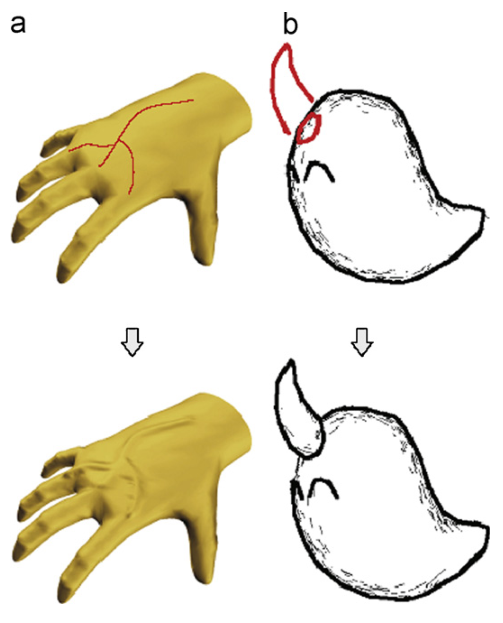
Fig. 18. Sketch-based augmentations: (a) surficial augmentation displaces surface elements to create features (from [87]); (b) additive augmentation joins a new part with an existing model (reproduced with permission from [29]). The latter figure also includes surficial features (the eyes).
相比从空白草图创建三维物体,在已有模型上加细节较容易,因为可以通过从眼点穿过笔画的射线求交,或用逆视变换与深度缓冲反投影确定落点。原文区分两种增补:
二者的界限主要是尺度与作用范围,作者承认带有主观性。更强烈的表面位移可能逐渐接近增加新部件;不能把「只改顶点」与「一定改变拓扑」作为这两个词的严格定义。Zelinka 与 Garland 的曲线类比方法也说明曲线网络可以驱动较显著的网格变化。
表格阅读提醒:正文在 §5.2 明确描述 Teddy 的部件增补,但原表 1 中 Teddy 的 Additive 栏没有标记。本文保留这个表格事实,同时保留正文描述;空白仅表示原表未标,不能据此否定系统在正文中明确讨论的能力。
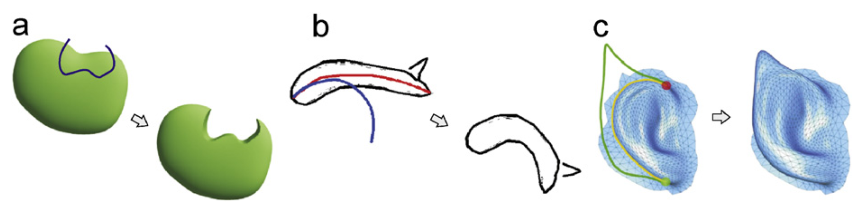
Fig. 19. Sketch-based deformations: (a) cutting strokes (blue) define a cutting plane along the view direction (from [91]); (b) bending a model so that a reference stroke (left) is aligned with a target stroke (right) [40]; (b) contour oversketching matches object contours (yellow) to target strokes (green) (reproduced with permission from [89]).
Deformation 包括切割、穿孔、弯曲、扭转、轮廓重描、分割、自由形变和仿射变换等。已有对象为草图提供参照,因此意图通常比从空白重建更明确,但模式、深度和影响范围仍需澄清。
| 操作 | 草图怎样指定它 | 系统需要完成什么 |
|---|---|---|
| 切割 | 旋转到适当视角,画切割笔画 | 沿视线扫掠笔画形成切割面,分割模型 |
| 穿孔/隧道 | 在模型投影内部画闭合轮廓 | 移除投影轮廓所限定区域内的部分,构造贯穿效果 |
| 弯曲/扭转 | 给出参考笔画与目标笔画 | 把对象随参考到目标的对应关系变形 |
| 轮廓重描 | 把从对象提取的原轮廓作为参照,画新的目标轮廓 | 调整表面,使投影轮廓符合新目标,同时处理细节保持 |
| 曲线把手 | 抓取并拖动已有约束曲线 | 改变曲线约束并重新优化曲面;原文的 FiberMesh 例子涉及相对视图平面的位移 |
| FFD 自由形变 | 通过草图控制包围对象的控制格 | 控制格移动带动其中几何,可形成局部或全局变化 |
图 19 原始图注最后一个子图重复写了「(b)」,图内实际标为「(c)」。本页按图内标签称轮廓重描为 (c),不把原图改画成新实验。
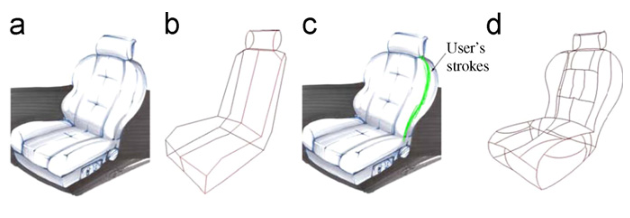
Fig. 20. Kara et al. propose a system that registers a chosen template object (b) to an input sketch (a). The user then interactively deforms the template by tracing over the sketch (c); the resulting model (d). Reproduced from [27].
Kara 等的模板变形流程先由用户选一个合适模板,再将其配准到概念草图,随后沿草图重描以交互调整。它说明 Evocative 和 Deformation 可以交叉:模板提供初始结构,用户编辑使其接近个性化目标。人工选择模板属于流程的一部分,不能在概述中隐藏成全自动生成。
| 表示 | 原文强调的优势 | 原文强调的限制 | 设计含义 |
|---|---|---|---|
| Parametric 参数曲面 | NURBS、旋转面、旋转混合面等研究成熟,便于集成和导出 | 单片常用构造的拓扑有限;复杂分支需要拼片与接缝处理 | 可控、结构化曲面有利于工业造型,但不能无代价覆盖任意拓扑 |
| Mesh 网格 | 支持一般拓扑,易渲染,很多编辑算子可作用在网格上 | 混合困难;不规则面影响光照及几何属性计算 | 既要生成形状,也要管理质量、重网格化和编辑后的稳定性 |
| Implicit 隐式曲面 | 层次建模、混合、布尔操作自然 | 早期系统多为光滑团块;锐利细节与直接抓取困难;需提取表面用于渲染 | 适合组合与融合,但具体系统须补足控制机制和交互性能 |
| Volumetric 体积表示 | 容纳更广拓扑和内部结构,切割等操作较直接 | 渲染要离散化/多边形化,直接操作并不容易 | 原文将其作为隐式表示的更完整体积背景讨论,表 1 未独立设一列 |
| Fair surface 受约束光顺曲面 | 通过曲线等约束重求光顺网格,灵活匹配草图 | 常过于光顺;全局优化结果可能难以预期 | Fair 仍可能是网格,不是与 Mesh 在数学上严格互斥的类型 |
隐式曲面可一般地表示为 \(\mathcal{S}=\{\mathbf{x}\mid f(\mathbf{x})=\tau\}\),其中 \(\tau\) 是等值面水平。它说明表面来自体积函数的一个水平集,不规定某个系统使用哪种核、网格分辨率或求解器。原文关于「直接操作不可行」等论断应按当时表示与界面实现理解,不应改写为任何隐式表示在数学上永远无法交互编辑。
Our Interpretation:原始笔画、解释后的约束与最终渲染网格应区分。若只保留最终网格,之后想按原先语义重描会更困难;若持续保留约束,编辑可以更连贯,但也必须管理约束冲突和全局影响。
完整系统同时支持创建、增补、变形、视角与显示控制,同一笔画在不同状态下可能意义不同。传统模式通过菜单、按钮或修饰键显式切换;原文以 Teddy 的弯曲操作说明参考线画完后需告诉系统下一条是目标线。
手势把一些命令变成自由笔画,但用户仍需学习笔画与操作的映射。若任意草图都可出现,几乎不可能保证命令手势与形状笔画永不冲突。作者给出两条路:设计不同模式间互斥的输入,或识别歧义并让用户澄清。后者就是 suggestive interface 的重要来源。
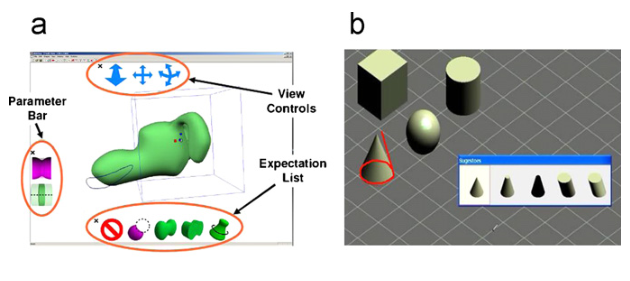
Fig. 21. Suggestive interfaces use expectation lists to disambiguate input: (a) interface of ShapeShop [16], showing an expectation list for operations. (b) Interface of GIDeS [45], showing expectation lists with different shapes for user confirmation.
系统可以列出操作候选,也可列出同一草图的形状候选。候选应按可能性排序,只展示少量合理选择;全列出来会造成负担。系统还可适应个人使用模式,但原文没有给出一套统一学习模型。随着功能增加,列表频繁弹出会干扰工作,因此候选准确率、弹出时机与用户控制要一起考虑。
Severn 等的 transformation strokes 用一个 U 形笔画同时指定二维尺度、放置与方向等参数;深度还要借助场景对象消歧。Schmidt 等则让手势只启动操作控件,再用直接拖动完成精确变换。两者说明手势可以承载参数,也可以只负责快速召唤熟悉控件。
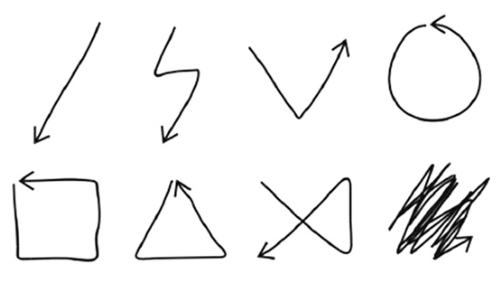
Fig. 22. Sample gestures recognized in [101].
| 路线 | 表示与比较方式 | 适用性与限制 |
|---|---|---|
| 几何特征 | 初始角度、包围盒、曲线长度、曲率、面积等 | 有限、可区分的词汇中可高效;不能直接等同任意形状理解 |
| 图与结构关系 | 笔画交叉、端点相接、组件关系 | 适合结构化符号;依赖可靠分段与关系识别 |
| 领域语法 | 用基元及几何约束描述模板,如 LADDER | 提高解释层次,但需要显式设计规则 |
| Fourier 特征 | 把二维坐标分成信号,变换后保留固定数量的重要系数,再按元素比较 | 方便统一变长笔画,长波支持带来局部性损失 |
| Wavelet 特征 | 用局部波改善特征局部性 | 原文指出长度限制等问题;没有声称所有小波实现一致 |
| Dollar One Recognizer [111] | 重采样,按指示角对齐,非均匀缩放到单位方形,再作逐点距离比较 | 适合快速原型中的有限词汇;标准化主动移除了一些速度、方向、比例信息 |
| 任务特化的轻量描述 | Teddy 的长度/凸包周长比、Yang 的笔画签名、Olsen 等的角度量化 | 为目标 SBIM 操作追求快速区分,不是通用对象检索基准 |
Our Interpretation:方向或比例不变性是否合适,要看语义。如果 U 形手势的宽高就是要输入的参数,不能不加区分地套用非均匀缩放;如果方向代表移动或旋转意图,也不能随意消去它。这是输入语义与识别预处理之间的设计问题。
综述对一些识别器使用「表现良好」「低计算负担」等文字评价,但没有在统一数据、相同词汇和相同训练协议下给出准确率表。本页不制造统一排行榜,也不把这里的少量示例训练解释成神经网络训练。
原表位于 PDF 第 7 页(刊页 91),是横向排版的能力矩阵。本页把它分成创建、表面、编辑、界面四个分面,每个分面保留全部 39 行,并重复年份与系统名,避免必须在过宽表格里来回寻找行。所有 17 个原始能力列均保留,没有筛掉空白多的系统或历史工作。
图例:● 表示原表有标记;— 表示原表未标。原作者说明表格概括主要技术与特性,表面和界面信息在可获得时才标示。因此 — 不等于已经证实不支持。年份按原表继承展开,同一年原本留白的后续行在这里重复年份。
本次从原 PDF 的旋转坐标和标记字形逐格恢复:\(39\times17=663\) 个能力格,156 个有标记,507 个未标记。这些是对原表的审计计数,不是系统质量评分。表头原文的「Additive Ang.」依正文语义展示为部件增补(Additive Augmentation),该文字整理不改变任何格子的标记。
| 年份 | 系统/原参考编号 | 标志笔画 Iconic | 模板 Template | 工程 Engineering | 自由形 Free-form | 多视图 Multi-view |
|---|---|---|---|---|---|---|
| 1989 | Tanaka et al. [14] | — | — | — | ● | — |
| 1992 | Kanai et al. [57] | — | — | — | ● | — |
| 1996 | Lipson [58] | — | — | ● | — | — |
| 1996 | SKETCH [44] | ● | — | — | — | — |
| 1997 | Quicksketch [36] | — | — | — | ● | — |
| 1998 | Digital Clay [49] | — | — | ● | — | — |
| 1999 | Teddy [29,59] | — | — | — | ● | — |
| 2000 | GIDeS [60] | ● | — | ● | — | ● |
| 2001 | Chateau [47] | ● | — | — | — | — |
| 2002 | Karpenko et al. [61] | — | — | — | ● | — |
| 2002 | 3d Sketch [62] | — | — | ● | — | — |
| 2003 | CIGRO [48] | — | — | ● | — | — |
| 2003 | BlobMaker [51] | — | — | — | ● | — |
| 2003 | 3D Search [63] | — | ● | — | — | — |
| 2003 | Piquer et al. [64] | — | — | ● | — | — |
| 2004 | Alexe et al. [32] | — | — | — | ● | — |
| 2004 | Karpenko et al. [65] | — | — | — | ● | — |
| 2004 | Smartpaper [53] | — | — | ● | — | — |
| 2004 | ConvMo [66] | — | — | — | ● | — |
| 2004 | Ribald [67] | — | — | ● | — | — |
| 2005 | Cherlin et al. [40] | — | — | — | ● | — |
| 2005 | Das et al. [21] | — | — | — | — | ● |
| 2005 | Masry and Lipson [11] | — | — | ● | — | — |
| 2005 | ShapeShop [16] | — | — | — | ● | — |
| 2005 | Varley et al. [68] | — | — | ● | — | — |
| 2005 | Yang et al. [26] | — | ● | — | — | — |
| 2006 | Kara et al. [27] | — | ● | — | — | — |
| 2006 | SmoothSketch [55] | — | — | — | ● | — |
| 2006 | Kara and Shimada [39] | — | — | — | — | ● |
| 2006 | Owada et al. [69] | — | — | — | ● | — |
| 2007 | Cordier and Seo [70] | — | — | — | ● | — |
| 2007 | Hui and Lai [71] | — | — | — | — | ● |
| 2007 | Plushie [72] | — | — | — | ● | — |
| 2007 | FiberMesh [56] | — | — | — | ● | ● |
| 2007 | Rose et al. [73] | — | — | — | — | ● |
| 2007 | Magic Canvas [74] | — | ● | — | — | — |
| 2007 | Wang and Markosian [75] | — | — | — | ● | — |
| 2008 | ShapeShop v2 [76] | — | — | ● | ● | — |
| 2008 | Lee and Funkhouser [77] | — | ● | — | — | — |
| 年份 | 系统/原参考编号 | 参数面 Parametric | 网格 Mesh | 隐式 Implicit | 光顺曲面 Fair |
|---|---|---|---|---|---|
| 1989 | Tanaka et al. [14] | ● | — | — | — |
| 1992 | Kanai et al. [57] | ● | — | — | — |
| 1996 | Lipson [58] | — | ● | — | — |
| 1996 | SKETCH [44] | — | ● | — | — |
| 1997 | Quicksketch [36] | ● | ● | — | — |
| 1998 | Digital Clay [49] | — | ● | — | — |
| 1999 | Teddy [29,59] | — | ● | — | — |
| 2000 | GIDeS [60] | — | ● | — | — |
| 2001 | Chateau [47] | — | ● | — | — |
| 2002 | Karpenko et al. [61] | — | — | ● | — |
| 2002 | 3d Sketch [62] | — | ● | — | — |
| 2003 | CIGRO [48] | — | ● | — | — |
| 2003 | BlobMaker [51] | — | — | ● | — |
| 2003 | 3D Search [63] | — | ● | — | — |
| 2003 | Piquer et al. [64] | — | ● | — | — |
| 2004 | Alexe et al. [32] | — | — | ● | — |
| 2004 | Karpenko et al. [65] | — | — | ● | — |
| 2004 | Smartpaper [53] | — | ● | — | — |
| 2004 | ConvMo [66] | — | ● | — | — |
| 2004 | Ribald [67] | — | ● | — | — |
| 2005 | Cherlin et al. [40] | ● | — | — | — |
| 2005 | Das et al. [21] | — | ● | — | — |
| 2005 | Masry and Lipson [11] | — | ● | — | — |
| 2005 | ShapeShop [16] | — | — | ● | — |
| 2005 | Varley et al. [68] | — | ● | — | — |
| 2005 | Yang et al. [26] | ● | — | — | — |
| 2006 | Kara et al. [27] | ● | — | — | — |
| 2006 | SmoothSketch [55] | — | ● | — | — |
| 2006 | Kara and Shimada [39] | — | ● | — | — |
| 2006 | Owada et al. [69] | — | — | ● | — |
| 2007 | Cordier and Seo [70] | — | — | ● | — |
| 2007 | Hui and Lai [71] | — | ● | — | — |
| 2007 | Plushie [72] | — | ● | — | — |
| 2007 | FiberMesh [56] | — | — | — | ● |
| 2007 | Rose et al. [73] | — | — | — | ● |
| 2007 | Magic Canvas [74] | — | ● | — | — |
| 2007 | Wang and Markosian [75] | ● | ● | — | — |
| 2008 | ShapeShop v2 [76] | — | ● | — | — |
| 2008 | Lee and Funkhouser [77] | — | ● | — | — |
| 年份 | 系统/原参考编号 | 表面增补 | 部件增补 | 切割/穿孔 | 重描 Oversketch | 弯曲/扭转 | CSG/布尔 |
|---|---|---|---|---|---|---|---|
| 1989 | Tanaka et al. [14] | — | — | — | — | — | — |
| 1992 | Kanai et al. [57] | — | — | — | ● | — | — |
| 1996 | Lipson [58] | — | — | — | — | — | — |
| 1996 | SKETCH [44] | — | — | — | — | — | — |
| 1997 | Quicksketch [36] | ● | — | — | — | ● | — |
| 1998 | Digital Clay [49] | — | — | — | — | — | — |
| 1999 | Teddy [29,59] | ● | — | ● | — | ● | — |
| 2000 | GIDeS [60] | — | — | — | — | — | ● |
| 2001 | Chateau [47] | — | — | — | — | — | — |
| 2002 | Karpenko et al. [61] | — | ● | — | — | — | ● |
| 2002 | 3d Sketch [62] | — | — | — | — | — | — |
| 2003 | CIGRO [48] | — | — | — | — | — | — |
| 2003 | BlobMaker [51] | — | ● | — | ● | — | ● |
| 2003 | 3D Search [63] | — | — | — | — | — | — |
| 2003 | Piquer et al. [64] | — | — | — | — | — | — |
| 2004 | Alexe et al. [32] | — | ● | — | — | ● | ● |
| 2004 | Karpenko et al. [65] | — | — | — | ● | — | — |
| 2004 | Smartpaper [53] | — | ● | ● | — | — | ● |
| 2004 | ConvMo [66] | — | ● | — | — | — | ● |
| 2004 | Ribald [67] | — | — | — | — | — | — |
| 2005 | Cherlin et al. [40] | — | — | — | ● | ● | — |
| 2005 | Das et al. [21] | — | — | — | — | — | — |
| 2005 | Masry and Lipson [11] | — | — | — | ● | — | — |
| 2005 | ShapeShop [16] | ● | ● | ● | — | — | ● |
| 2005 | Varley et al. [68] | — | — | — | — | — | — |
| 2005 | Yang et al. [26] | ● | — | — | — | — | — |
| 2006 | Kara et al. [27] | ● | — | — | ● | — | — |
| 2006 | SmoothSketch [55] | — | — | — | — | — | — |
| 2006 | Kara and Shimada [39] | — | — | — | ● | — | — |
| 2006 | Owada et al. [69] | — | ● | ● | — | — | ● |
| 2007 | Cordier and Seo [70] | — | — | — | — | — | — |
| 2007 | Hui and Lai [71] | — | — | — | — | — | — |
| 2007 | Plushie [72] | — | ● | ● | — | — | — |
| 2007 | FiberMesh [56] | ● | ● | ● | ● | — | — |
| 2007 | Rose et al. [73] | — | — | — | — | — | — |
| 2007 | Magic Canvas [74] | — | — | — | — | — | — |
| 2007 | Wang and Markosian [75] | — | — | — | ● | — | ● |
| 2008 | ShapeShop v2 [76] | ● | ● | ● | — | — | ● |
| 2008 | Lee and Funkhouser [77] | — | ● | — | — | — | ● |
| 年份 | 系统/原参考编号 | 候选建议 Suggestive | 手势 Gestural |
|---|---|---|---|
| 1989 | Tanaka et al. [14] | — | — |
| 1992 | Kanai et al. [57] | — | — |
| 1996 | Lipson [58] | — | — |
| 1996 | SKETCH [44] | ● | — |
| 1997 | Quicksketch [36] | ● | — |
| 1998 | Digital Clay [49] | — | — |
| 1999 | Teddy [29,59] | — | ● |
| 2000 | GIDeS [60] | — | ● |
| 2001 | Chateau [47] | ● | — |
| 2002 | Karpenko et al. [61] | — | — |
| 2002 | 3d Sketch [62] | — | — |
| 2003 | CIGRO [48] | — | ● |
| 2003 | BlobMaker [51] | ● | ● |
| 2003 | 3D Search [63] | ● | — |
| 2003 | Piquer et al. [64] | — | — |
| 2004 | Alexe et al. [32] | — | — |
| 2004 | Karpenko et al. [65] | — | — |
| 2004 | Smartpaper [53] | — | ● |
| 2004 | ConvMo [66] | — | — |
| 2004 | Ribald [67] | — | — |
| 2005 | Cherlin et al. [40] | — | — |
| 2005 | Das et al. [21] | — | — |
| 2005 | Masry and Lipson [11] | — | — |
| 2005 | ShapeShop [16] | ● | ● |
| 2005 | Varley et al. [68] | — | — |
| 2005 | Yang et al. [26] | — | — |
| 2006 | Kara et al. [27] | — | — |
| 2006 | SmoothSketch [55] | — | — |
| 2006 | Kara and Shimada [39] | — | ● |
| 2006 | Owada et al. [69] | — | ● |
| 2007 | Cordier and Seo [70] | — | — |
| 2007 | Hui and Lai [71] | — | — |
| 2007 | Plushie [72] | — | ● |
| 2007 | FiberMesh [56] | — | ● |
| 2007 | Rose et al. [73] | ● | — |
| 2007 | Magic Canvas [74] | ● | ● |
| 2007 | Wang and Markosian [75] | — | ● |
| 2008 | ShapeShop v2 [76] | ● | ● |
| 2008 | Lee and Funkhouser [77] | ● | — |
有用的横向比较是「这个系统用什么约束获得怎样的能力」,而不是给每行数点后宣布最多者最好。表中没有统一任务难度、质量指标、延迟、训练成本或用户研究结果;不同系统的目标差异很大。
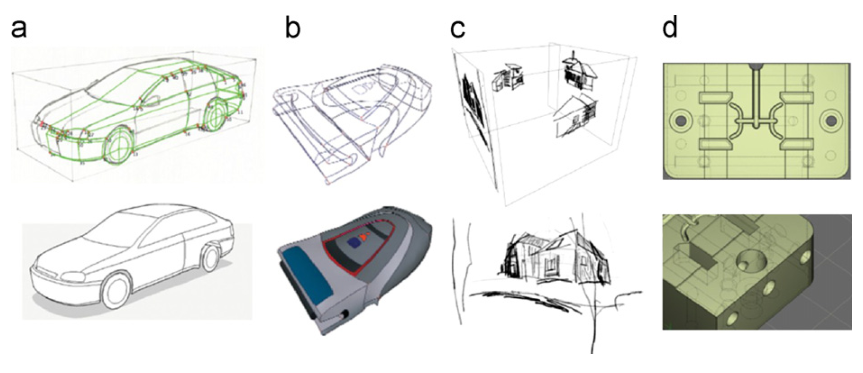
Fig. 23. Applications of SBIM in CAD: (a) automotive design [112]; (b) industrial design [113,114]; (c) architecture [22]; (d) mechanical engineering [115,116].
原文将 CAD 应用概括为最终会有物理实现的对象设计,因此不只要「看起来像」,还需要尺寸、构造和制造限制。工业造型中的精确 NURBS 类曲面难以仅用任意草图表达,常见路线是构造曲线、特征线或模板变形。汽车与工业造型例子分别见 Das 等和 Kara 等的相关工作。
机械对象需要部件位置与几何约束。GIDeS 把标志笔画、约束、动态菜单与候选列表结合,用于二维/三维构造及 CSG;CEGROSS 也把约束满足和重建结合起来。建筑方向中,Cocktail Napkin 奠定了草图理解的背景,Esquisse 面向从平面概念草图到建筑建模;Mental Canvas 则侧重多绘图平面和空间推移形成的概念表达,不宜直接称作完整实体重建。
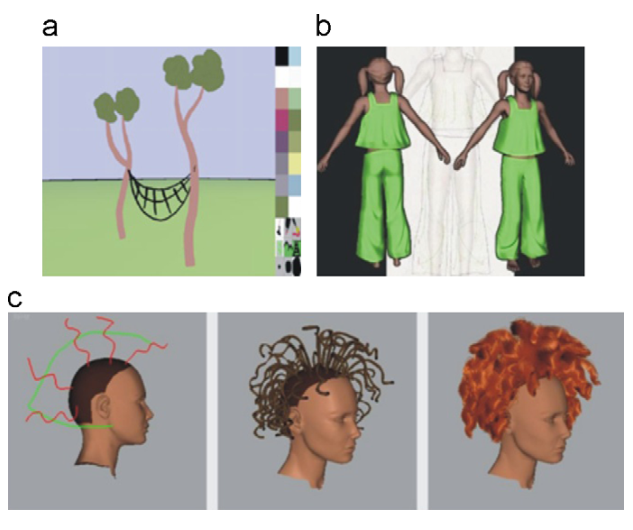
Fig. 24. Applications of SBIM in content creation: (a) interactive worlds [123]; (b) garment design [124]; (c) hair modeling [125].
| 领域 | 原文代表思路 | 草图承担的角色 | 输出与限制 |
|---|---|---|---|
| 交互世界与场景 | Harold 绘制地形、树木、建筑、角色;Bourguignon 等把线条提升到空间 | 快速构建和视觉沟通 | Harold 使用视点相关的 2.5D billboard,不能当作完整三维曲面恢复 |
| 服装 | Turquin 等绘制衣物前后轮廓并推断形状与穿着状态 | 服装外形与身体关系的约束 | 依赖角色、服装领域知识,不是任意物体恢复 |
| 角色动画 | Davis 等从简笔人物提取关节并施加几何/物理约束;Motion Doodles 将手势映射到预定义动作 | 指定姿势、位置或动作 | 姿态重建与动作词汇选择是不同任务 |
| 头发 | Wither 等用示例发丝推断几何和机械属性;Malik 模拟剪、梳、卷曲、扭转等操作 | 控制大量纤维的总体外形与局部修改 | 从少量笔画到丰富结构依赖专门先验和生成机制 |
| 树木 | 由分支草图推断结构;用手势控制递归枝干;向喷涂叶区生长枝条 | 姿态、分支、叶片分布的高层控制 | 模型族与生长规则限定可达形态 |
| 花与植物布置 | 花器官草图结合花式图与花序图规则;以不同绘图平面细化器官 | 局部器官与整体组织结构 | 领域结构知识承担了大量三维推断 |
| 程序化植物 | Anastacio 等从概念草图构造叶序/位置函数,并驱动 L-system | 以草图约束程序参数和布局 | 草图不是最终网格,也不等于逐节点手工建模 |
Our Interpretation:CAD 与内容创建不是永远互斥的行业标签,而是目标差异的概括。某个数字资产也可能要求精确尺寸,概念 CAD 草图也可能有意保持模糊。选技术时应先说明哪些量必须准确、哪些部分允许推测、输出将怎样继续被编辑或制造。
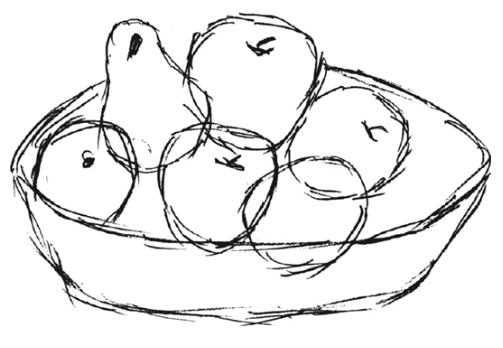
Fig. 25. Support for natural sketching, with overlapping or extraneous strokes, is lacking in SBIM systems.
真实草图包含淡的构造线、短笔画、重叠、任意笔顺、交叉、间断和冗余。许多当时系统却要求特定、干净的绘制方式;如果为了让算法工作而改变用户自然表达,输入设备像笔也不等于交互自然。
WIMP 的操作可能难找,但选定后的结果往往清楚;草图系统容易把输入误判成另一操作。作者强调足够反馈、识别困难输入并引导解决的重要性。另一个问题是 self-disclosure:空白画布没有菜单提示,新手难以知道系统能做什么。减少可见控件可能同时减少可发现性。
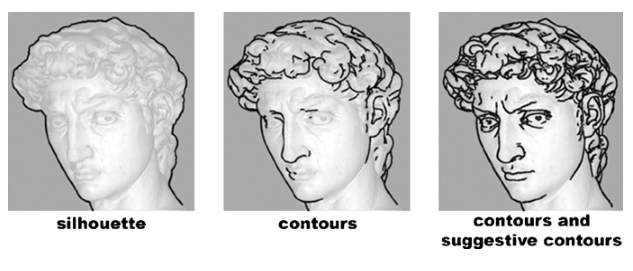
Fig. 26. Shape cues beyond contour lines could be used to sketch more complex and less ambiguous shapes (image source: www.cs.rutgers.edu/decarlo/con- tour.html).
排线、涂写、点描、明暗和提示性轮廓都能表达形状,不能只依赖外轮廓。作者把 SBIM 与非真实感绘制联系起来:NPR 研究怎样用少量艺术线索清楚表达三维形状,SBIM 可以反向利用这些线索。这个「inverse NPR」视角是研究动机,并不意味着绘制映射在数学上可唯一求逆。
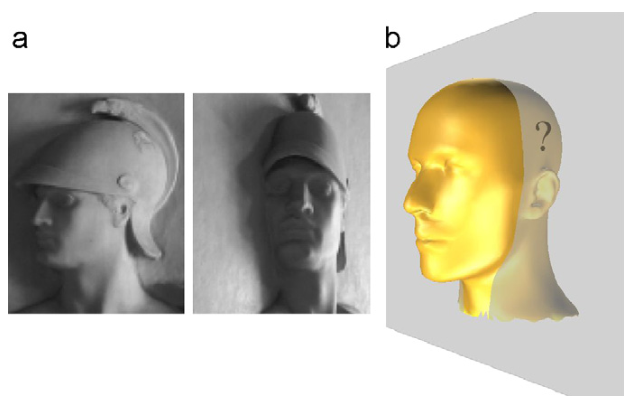
Fig. 27. Ambiguities in 2D: both (a) the depth (from [146]) and (b) occluded surfaces are difficult to recover by rules alone.
模板路线受库覆盖与相似度方法限制;规则路线面对深度与遮挡时缺少足够信息。作者提出把轮廓膨胀与大规模形状记忆结合,甚至学习新形状的混合方向。这里的学习设想没有给出训练集、网络架构或优化配方,不能解读为本文已经实现了现代学习式生成系统。
参数面便于导出和多分辨率处理,但复杂拓扑需拼片;网格拓扑灵活,却可能为高质量求解付出较大代价,并在局部操作时引起全局形变。许多当时模型外观偏光滑团块。作者希望结合高质量表示、局部笔画编辑和多分辨率细节,避免在「容易画」与「成品质量」之间只能二选一。
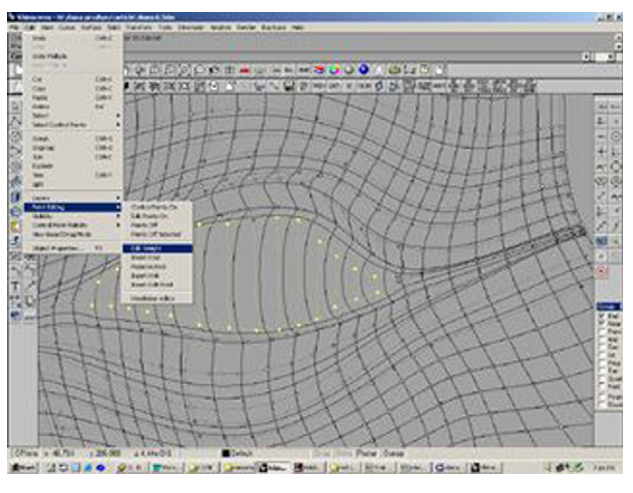
Fig. 28. Precision is often lacking in SBIM systems, making it a difficult sell for industrial use. Screenshot from Maya [1].
平行、垂直、等长、水平垂直对齐等约束能引入精度,但会增加界面复杂性。自由形系统往往为简洁而牺牲精确。作者同时质疑控制点是否就是最理想的精确操作:若要把曲面某点沿法线移动指定距离,应该动哪个控制点、动多少并不直观。因此,挑战是设计贴近目标的精确操作,而非简单恢复大量控制点。
| 挑战 | 作者指向的研究方向 | 本页建议的可检验证据 |
|---|---|---|
| 界面 | 自然草图、稳定反馈、可发现能力 | 任务完成、误解释修正成本、学习过程、用户能否找到操作 |
| 形状线索 | 轮廓之外的艺术线索与逆向 NPR | 新增线索在明确任务下减少了哪些歧义,而非只展示漂亮例子 |
| 记忆与规则 | 混合检索、重建与学习 | 覆盖外、遮挡、未见形态与个性化编辑中的行为 |
| 模型质量 | 局部、多分辨率、锐利细节与高质量表面 | 几何质量、细节保持、局部影响范围与交互延迟 |
| 精度 | 明确约束与贴近用户目标的操作 | 指定尺寸/关系的满足程度及为此增加的交互负担 |
Paper Verified:结论强调可预测的迭代建模,而不是只追求一次性纯重建。Our Interpretation:这些问题构成很好的研究检查维度,但本页没有逐项调查它们在 2026 年是否已解决;当前状态需要另一项有明确范围的研究。
综述从采集一路讲到解释、表面表示、模式与反馈,没有把「草图到三维」缩成一个孤立的重建器。Evocative/Constructive 与感知中的记忆/规则相对应,帮助解释系统为什么成功、又为什么受限。39 行能力表与 28 幅原图把大量经典工作组织成可比较结构;增补与变形又让创建结果能进入持续编辑。
作者承认分类存在交叠,区分完整曲面与 2.5D 沟通表示,也指出自然输入、精度、反馈和可发现性之间的张力。对研究者而言,这比只按照模型名称或年代排列论文更能暴露设计选择。
本次不虚构模型参数、基准分数或消融结果。对于这篇综述,最重要的核验是分类覆盖、表格忠实度、代表机制是否讲清,以及原文结论有没有被误用为当前事实。
对 Procedural Material Generation,可以把输入笔画看作一个带情境的操作请求,而非只当作需要模仿的像素。它可能表示创建一块材质、在现有图里添加裂纹、改变纹理走向,或修正某个局部结构。以下是本页的研究设想,不是该综述已经验证过的材质算法。
| 来自综述的思想 | PMG 中可研究的设计 | 必须明确的证据与失败情形 |
|---|---|---|
| 采集保留时间和分组 | 区分探索草线、明确修正、连续方向提示与压力控制 | 这些信息是否确实改善意图识别;不能把每条重叠线都当成新裂缝 |
| 过滤与意图分离 | 保留原笔画和可逆的拟合结果,允许改判结构线/细节线 | 量化错误清理删除真实细节的比例与恢复成本 |
| 模板与规则结合 | 检索可编辑的材质子图,再在节点类型、端口与执行约束下调整 | 库外意图、模板偏差、连接合法性、隐藏位图依赖和可编辑性 |
| 创建/增补/变形 | 把新图生成、局部子图添加、现有参数/拓扑修改设计成可辨别动作 | 同一笔画在不同模式下是否有明确反馈;操作可否撤销 |
| 候选建议与直接控件 | 歧义大时展示少量候选及影响范围,选定后用控件精调 | 候选出现频率、选择成本、误解释修正和用户控制感 |
| 表示与局部性 | 在材质图里追踪修改依赖,仅改变目标子图并保护无关属性 | 局部修改是否造成全局材质漂移;渲染一致不等于节点语义正确 |
候选流程是:采集笔画与当前选区 → 保留原始轨迹并拟合可解释约束 → 推断创建/增补/修改意图 → 检索或生成候选子图 → 检查节点、端口和执行合法性 → 多视角/多光照渲染 → 展示改动与候选 → 用户继续修正。若使用 Agent,应把模型建议、工具执行、执行失败与用户确认分别记录,不把内部猜测当作用户授权或已确认意图。
评价可分三层:首先检查图合法执行、目标属性满足和非目标属性保持;其次在固定生成后端下比较交互机制,避免把模型变强误归因为界面变好;最后观察有经验创作者和新手在明确控制任务、开放创作任务中的学习、修正与发现能力。渲染相似度、节点复杂度、完成时间和主观负担各测不同构念,不宜直接合成没有解释的总分。
机制实验可以分别移除笔顺信息、候选反馈或局部约束保护,观察它们是否减少了预先定义的错误。它们属于未来消融设计,本文没有提供样本量、效果大小或预期提升。研究目标应是让表达与可编辑性可验证,而不只是展示一次生成了漂亮纹理。
Reviewer Commentary 与 PMG 方案为本页分析;技术依据来自本文整体分类与 §8–9 的迭代建模讨论。
作者组网页所链接的 PDF 本次读取失败,未以另一个版本覆盖用户原文件。页面中的研究图直接来自用户原 PDF,并保留原图号、页码和原始图注来源归属;没有把研究示意图重新绘制成仿原图。
以下按原编号提供检索索引。它保留原始书目信息的历史状态,不表示所有链接、软件或会议仍按当年的方式存在,也不表示本次对 146 个被引对象逐一执行了代码或重复实验。PDF 中网址的括号字形与断行可能导致提取文本不完全规范;具体书目信息应回看原文,不能仅凭提取字符串点击未知地址。
完整新增 Markdown 与合并候选保留原笔记全部 984 字节作为逐字节前缀,包括原作者链接和 PDF 路径。建议把 venue 补充为 Computers & Graphics 33(1),保留 2009 年与现有 DOI;Luke Olsen 的通讯作者身份在原文得到明确确认。实际笔记、人物文件和索引尚未整合,候选文件供后续审阅。
本次进行内容、原表全部格子、原图解码、数学源码、导航目标与实际文件大小的静态检查。浏览器中的 MathJax 运行、图片布局、导航点击和 1440/760/390 像素的实际响应式表现,按约定留待下载后验收。没有将静态检查标成浏览器通过,也没有发布页面。